

The Royal College of Physicians has issued a stark warning over the future of the UK's clinical academic workforce, revealing a sharp decline in the number of doctors combining patient care with research.
Clinical academics play a vital role in developing new treatments, running clinical trials and ensuring cutting-edge medical discoveries reach patients faster. Yet they now account for just 3% of the senior clinical workforce, half the proportion seen in 2012.
According to the RCP's new report, Supporting Clinical Academic Careers, the workforce is facing mounting pressures that threaten the future of UK medical research. The college highlights fragmented career pathways, limited protected research time and a shortage of senior academic posts as key barriers preventing doctors from pursuing careers that combine frontline medicine with scientific research.
The findings come at a crucial time for the NHS and government. The government's 10-Year Health Plan commits to significantly expanding access to clinical trials and accelerating research delivery, with the aim of giving millions more people the opportunity to participate in studies involving innovative diagnostics and treatments.
However, the RCP warns that these ambitions may prove impossible to achieve if the decline in clinical academics continues unchecked.
A particularly concerning trend is the age profile of the workforce. The number of clinical academics under the age of 36 fell by 25% between 2024 and 2025, while doctors approaching retirement now outnumber those entering the profession.
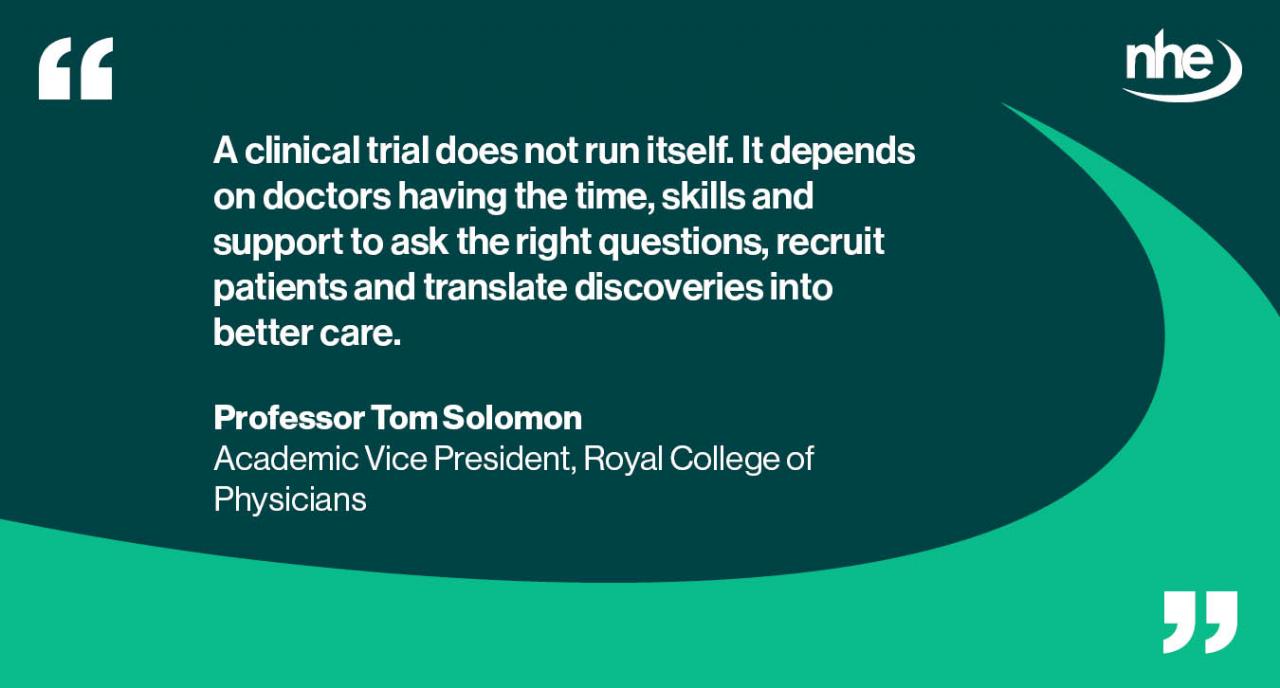
Professor Tom Solomon, RCP Academic Vice President, said:
“A clinical trial does not run itself. It depends on doctors having the time, skills and support to ask the right questions, recruit patients and translate discoveries into better care.
“Almost every major treatment we celebrate today, from new cancer therapies to treatments for neurodegenerative diseases and serious infections, exists because previous governments built the workforce needed to develop and test promising discoveries in patients. That workforce is now at severe risk.
“This is not only about improving health; clinical research is a major driver of economic growth. UK industry clinical trials generate billions of pounds for our economy and substantial income for the NHS. British discoveries such as Sir Greg Winter’s pioneering techniques for the humanisation of monoclonal antibodies have led to some of the world’s most successful medicines, created thriving companies and generated enormous economic value for the UK.
“The government is right to want more patients to benefit from clinical research. But that ambition cannot be delivered if we allow the clinical academic workforce to wither. We need to make these careers possible, sustainable and attractive now, before the pipeline runs dry. Otherwise, we will lose not only the next generation of leading clinical researchers, but also the treatments, companies and economic benefits their discoveries could create.”
The report sets out a series of recommendations designed to strengthen the clinical academic pipeline and ensure the NHS can continue to benefit from medical innovation.
Key proposals include:
- Introducing more flexible training routes for clinical academics, supported by protected research time.
- Creating a single, joined-up training and assessment framework for academic doctors.
- Providing clearer guidance for supervisors to better support and assess clinical academics.
- Tackling career bottlenecks at lecturer and consultant level through innovative partnerships involving universities, NHS organisations, industry and research funders.
- Establishing regional research training leads to improve access to opportunities outside traditional academic centres.
- Standardising NHS and university employment contracts, including arrangements for less-than-full-time working and parental leave.
The RCP argues that supporting clinical academic careers is not simply a workforce issue but a strategic investment in the UK's health and economic future.
Clinical academics are fundamental to translating scientific discoveries into treatments that improve patient outcomes, while also helping attract commercial research investment into the NHS. Without decisive action, the college warns, the UK's position as a global leader in clinical research could be undermined, jeopardising both future medical breakthroughs and economic growth.
As pressure grows to modernise healthcare delivery and expand patient access to innovative treatments, the future of the clinical academic workforce is likely to become a central issue for NHS leaders, policymakers and research organisations alike.
Image credit: iStock