

New research involving Kent and Medway Mental Health NHS Trust suggests that supported digital therapy could help NHS services provide more accessible and flexible treatment for people living with binge eating disorder.
Published in the Journal of Medical Internet Research, the study evaluated the effectiveness of supported digital enhanced cognitive behavioural therapy (CBT-E) when delivered as part of routine NHS eating disorder care.
The trust's All-Age Eating Disorder Service (AAEDS) played a key role in delivering and evaluating the programme, which combines evidence-based CBT-E through a smartphone app and website with support from trained mental health practitioners.
Adults experiencing symptoms of binge eating disorder completed 12 structured sessions through the digital platform over an eight to 12-week period. Each session typically took between 10 and 20 minutes to complete. Alongside the digital programme, participants received online support from a mental health wellbeing practitioner, helping them stay engaged and apply the therapy in their daily lives.
Researchers found that people who completed the programme reported fewer binge eating episodes and significant reductions in eating disorder symptoms. Participants also experienced improvements in overall wellbeing and mood.
Importantly, patients highlighted the convenience and accessibility of the approach, saying it fitted around work, family commitments and everyday life while helping them remain connected to treatment.
The findings indicate that supported digital CBT-E could become an important addition to NHS eating disorder services, offering patients greater flexibility while ensuring access to professional clinical support.
Dr Susie Greenwood, Consultant Clinical Psychologist at Kent and Medway Mental Health NHS Trust and study author, said:
“We are delighted to see this research published. Binge eating disorder can have a significant impact on people’s lives, and getting help early is important.
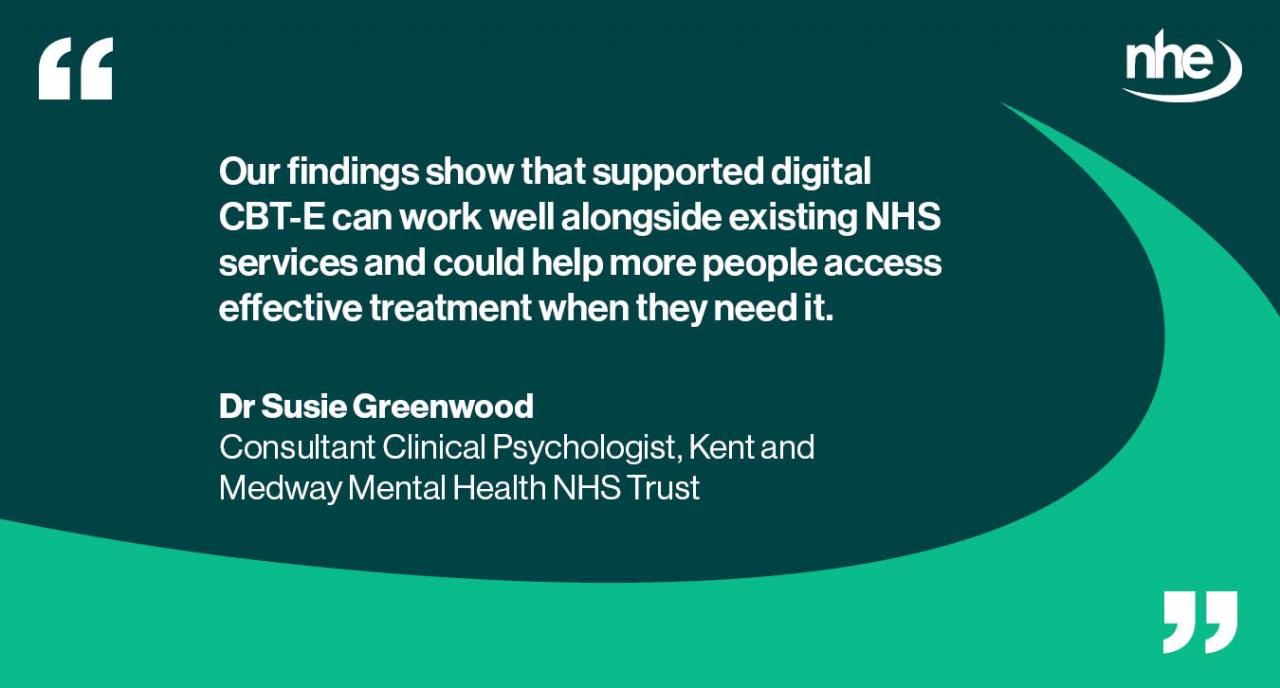
“Our findings show that supported digital CBT-E can work well alongside existing NHS services and could help more people access effective treatment when they need it.”
The study forms part of a wider programme of research exploring how digital health innovations can complement traditional NHS treatment pathways. By combining online therapeutic interventions with practitioner-led support, the model aims to increase patient choice without compromising the quality of care.
As demand for mental health services continues to grow, the research adds to an expanding evidence base supporting the use of digital therapies within the NHS. The findings also demonstrate how innovation and research can help shape future service development, improving access to effective care for people with eating disorders.
Image credit: iStock