

A major new report commissioned by Public Health Wales has highlighted the critical role gender inequality plays in driving child poverty and worsening health inequalities across Wales. The findings come at a time when one in three children under the age of four are living in poverty and healthy life expectancy continues to fall for both men and women across the nation.
The report, Why Gender Matters: Child Poverty and Health Inequalities, produced by researchers at Liverpool John Moores University, examines how differences in power, income and opportunities between men and women shape health and economic outcomes throughout life.
According to the research, gender inequality acts as a structural driver of poverty, with women often absorbing much of the financial pressure within households. As a result, inequalities experienced by women can directly affect children's living standards and long-term health outcomes.
The report reveals that these disparities begin to widen when people become parents. Women are more likely to experience what researchers describe as the "motherhood penalty", with childcare costs, limited state support in the early years and unequal uptake of parental leave all contributing to reduced earning potential and career progression.
By contrast, men's economic outcomes are typically less affected by becoming fathers. Women also remain disproportionately represented in part-time, low-paid and insecure employment, limiting their financial resilience and economic security.
The financial impact continues into later life. Gender gaps in savings, wealth accumulation and pensions leave many women with reduced long-term financial security. At the same time, women continue to undertake the majority of unpaid caring responsibilities, from looking after young children to supporting ageing relatives.
The report also highlights how poverty risks intensify when gender inequality intersects with other challenges, including disability, ethnicity, larger family sizes and the ongoing cost-of-living crisis. Researchers note that employment alone is no longer a guarantee against poverty, with the number of working households experiencing poverty rising steadily for more than a decade.
To address these issues, the report calls for greater investment in the care economy throughout the life course, particularly in childcare, early years support and social care services. It argues that accessible, affordable and flexible childcare is essential if women are to participate fully in the labour market and progress in their careers.
International evidence cited in the report suggests that sustained investment in high-quality childcare, alongside adequate parental leave and access to fair, secure work, can help reduce gender inequalities and improve outcomes for families.
Jo Peden, Consultant in Public Health for Public Health Wales, said:
“We know that financial wellbeing drives better health and a prosperous economy, and that secure and fairly rewarded work that pays a living wage is good for our health.
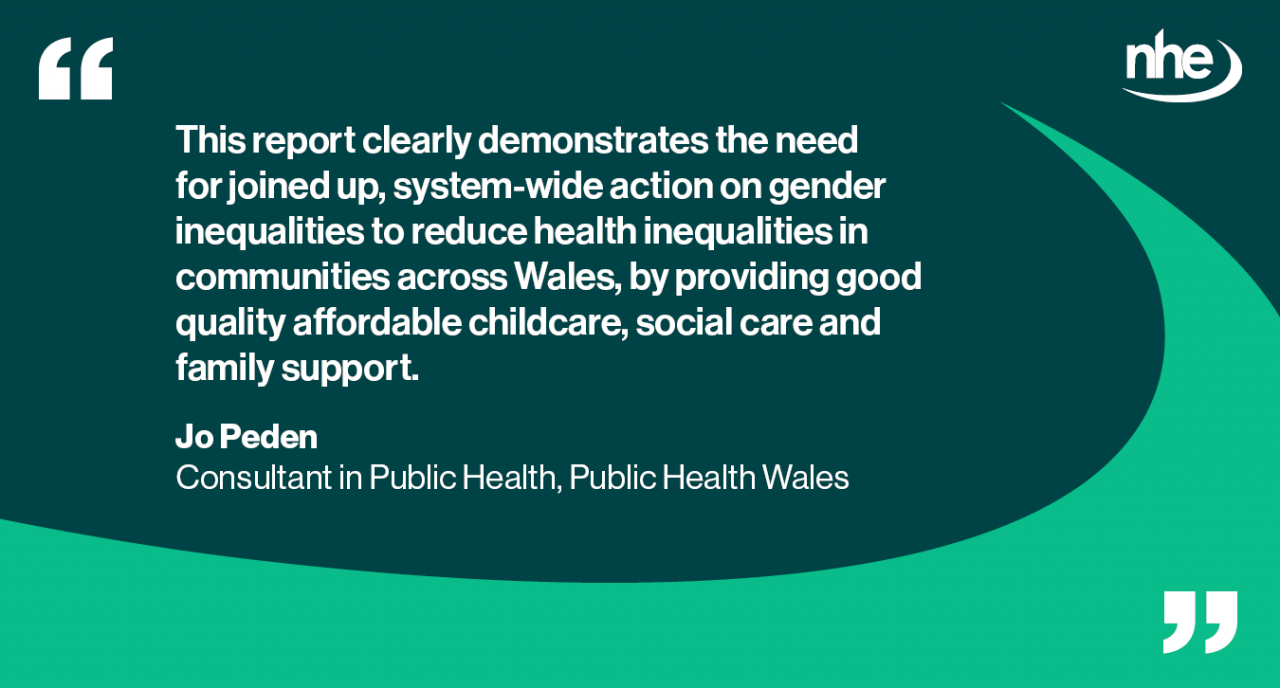
“This report clearly demonstrates the need for joined up, system-wide action on gender inequalities to reduce health inequalities in communities across Wales, by providing good quality affordable childcare, social care and family support.
“Women’s economic security means secure and fairly-paid employment in roles across the workforce, not just in sectors associated with low pay and insecure work.
“While policy decisions can influence caring norms, it is vital that this is reflected and aligned within workplace practices and wider cultural expectations as this will ensure ongoing impact.
“By using a gender lens to look at health inequalities in Wales, this report demonstrates that taking action to reduce gender inequalities will have a tangible benefit in improving wellbeing for families across the country.”
The report concludes that tackling gender inequality is not only critical for improving women's economic security but is also essential to reducing child poverty and narrowing health inequalities across Wales.
Image credit: iStock