

Thousands of lives could be saved and millions more improved under a new government strategy aimed at tackling one of the UK’s biggest killers: cardiovascular disease.
The Cardiovascular Disease Modern Service Framework sets out a national blueprint to reduce early deaths from heart disease and stroke, conditions currently responsible for one in four premature deaths in the UK. The framework signals a decisive move towards prevention-led care, earlier diagnosis and more equitable access to treatment across health and care systems.
Every three minutes, someone in the UK dies from heart or circulatory disease. Around 33,000 people die prematurely each year from heart disease and stroke, underlining the urgency behind the government’s renewed focus.
At the heart of the framework is an ambitious target: to reduce premature deaths from cardiovascular disease by 25% over the next decade. The plan aligns closely with the broader 10 Year Health Plan and the NHS’s ongoing shift from reactive to preventative healthcare.
Central to delivery will be strategic partnerships, with Diabetes UK announced as the first national collaborator. The partnership will focus on raising awareness of the strong links between type 2 diabetes and cardiovascular disease, promoting earlier intervention and healthier behaviours.
A national awareness campaign will form part of this effort, alongside expanded use of the Know Your Risk tool, enabling individuals to better understand their personal health risks and take preventative action.
The connection between diabetes and cardiovascular disease is well established. Individuals with diabetes or prediabetes face a significantly increased risk of heart attack and stroke.
Across the UK:
- More than 4 million people have been diagnosed with type 2 diabetes
- A further 1.3 million people are estimated to be undiagnosed
This presents a major opportunity for earlier detection and intervention – one the framework aims to address through integrated care pathways and population health management.
Secretary of State for Health and Social Care, James Murray, emphasised the need for urgent action:
“Too many people are dying early from heart attacks and strokes that we know are preventable.
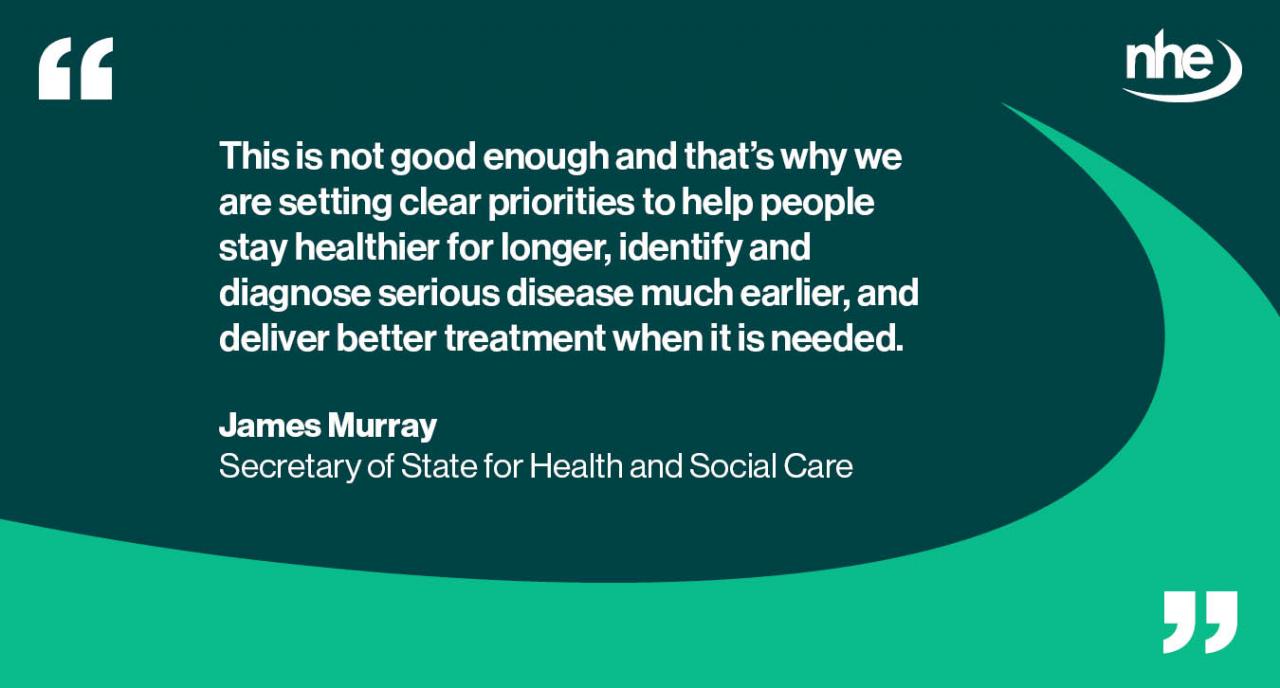
“This is not good enough and that’s why we are setting clear priorities to help people stay healthier for longer, identify and diagnose serious disease much earlier, and deliver better treatment when it is needed.
“But we know we cannot do all this by ourselves. That is why I am proud of our new partnership with Diabetes UK, the first of many, through which we will work closely with expert organisations to help people reduce their risk of getting ill and know where to get help.”
The framework outlines 12 priority actions to be implemented over the next three years by local health and care systems. These are designed to reduce variation in care, improve outcomes and address health inequalities.
Key priorities include:
- Identifying and managing high-risk conditions
Including hypertension, high cholesterol, chronic kidney disease, diabetes and heart failure through proactive case finding and personalised care. - Improving urgent care pathways
Ensuring patients experiencing heart attacks or strokes receive rapid, high-quality treatment, where minutes can mean the difference between life and death. - Expanding rehabilitation and long-term support
Helping patients recover more effectively and return to daily life through improved access to cardiac and stroke rehabilitation services.
If successfully implemented, the framework could deliver significant clinical impact:
- 1,600–2,400 fewer premature deaths annually within the first three years (under age 75)
- 3,850–4,900 fewer deaths per year after 10 years
These reductions would represent a major improvement in population health, while relieving pressure on stretched NHS services.
Supporting the framework is the Prevention Accelerators programme, launched last month. This initiative brings together NHS organisations, local authorities and community partners to identify at-risk populations and improve uptake of preventative interventions.
The programme will focus on:
- Increasing early detection of cardiovascular and metabolic conditions
- Expanding access to high-impact interventions
- Encouraging healthier lifestyle behaviours
For NHS leaders and system managers, the framework reinforces a fundamental shift in healthcare delivery, from treating illness to preventing it.
By prioritising early diagnosis, population health management and cross-sector collaboration, the strategy aims to create a more sustainable health system while improving patient outcomes at scale.
Image credit: iStock