

A pioneering diagnostic test developed in Manchester is transforming the way clinicians identify patients who are not taking prescribed medications, helping improve the management of long-term conditions and reduce unnecessary treatment escalation.
Researchers from Manchester University NHS Foundation Trust Clinical Biochemistry Department, working in collaboration with The University of Manchester Division of Cardiovascular Sciences and the Manchester Molecular Pathology Innovation Centre (MMPathIC), first launched an in-house urine screening test in 2018 to identify non-adherence to blood pressure-lowering medications.
The innovative test, the first of its kind to be routinely offered to patients and clinicians across the North West, initially screened for 37 commonly prescribed antihypertensive medicines. Using a single spot urine sample, it was able to detect the presence of almost all routinely prescribed blood pressure medications with a high degree of sensitivity and specificity.
Since its introduction into clinical practice, the test has helped clinicians distinguish between patients whose hypertension is genuinely resistant to treatment and those whose blood pressure remains uncontrolled because medications are not being taken as prescribed.
The success of the programme highlighted the scale of medication non-adherence across the region and created an opportunity to broaden its application to other chronic conditions.
In 2023, Professor Maciej Tomaszewski, Co-lead for the Integrated Cardiovascular Medicine Theme within the NIHR Manchester Biomedical Research Centre (BRC) and Deputy Director of the British Heart Foundation Manchester Centre of Research Excellence, led a consultation with MFT consultants to explore how the technology could support additional medical specialties.
As a result, the research team expanded the scope of the test, identifying a wider range of medicines used across different areas of healthcare. The latest version can now detect 64 medications, including treatments prescribed in diabetes, cardiology, nephrology, rheumatology and lipid management clinics.
The expanded platform has positioned the MFT laboratory among just two centres in the UK capable of offering medication adherence testing at this scale.
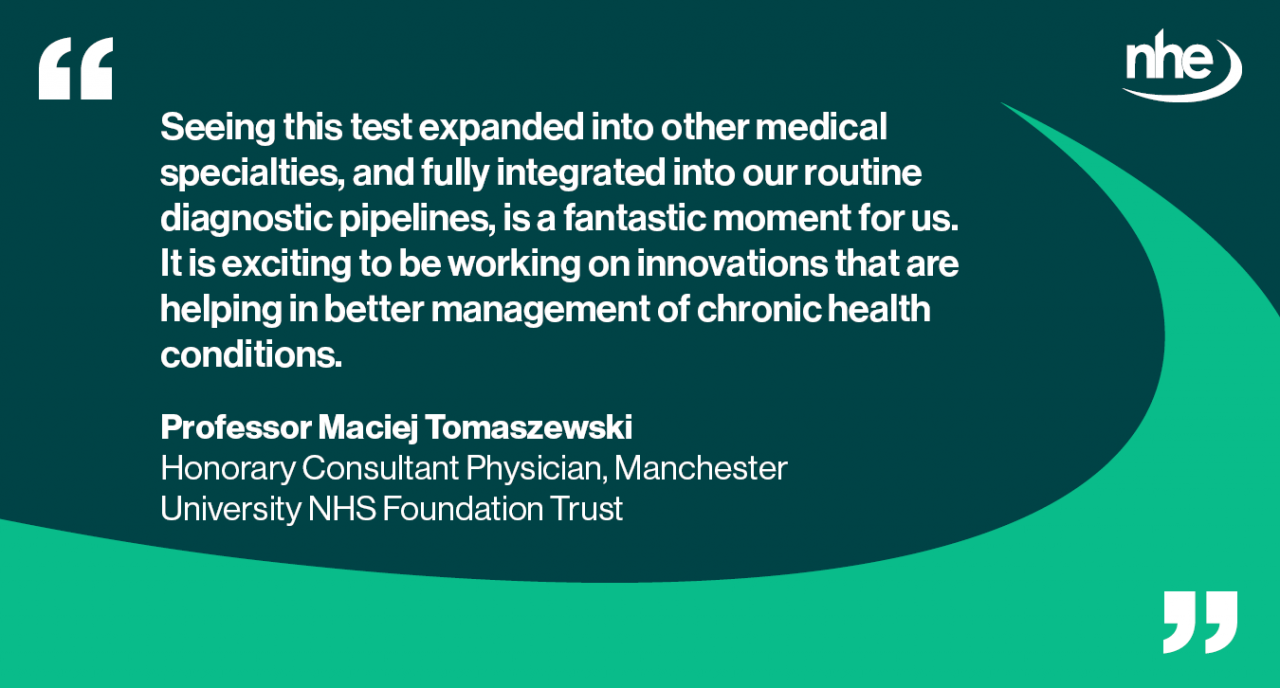
Professor Maciej Tomaszewski, Professor of Cardiovascular Medicine at The University of Manchester and Honorary Consultant Physician at Manchester University NHS Foundation Trust, who led the expansion, said:
“Seeing this test expanded into other medical specialties, and fully integrated into our routine diagnostic pipelines, is a fantastic moment for us. It is exciting to be working on innovations that are helping in better management of chronic health conditions. I am immensely grateful to NIHR Manchester BRC for funding this development.”
Medication adherence remains one of the most significant challenges in managing chronic diseases. High blood pressure is the third largest risk factor for disease in the UK after smoking and poor diet, costing the NHS more than £2.1 billion annually. Despite the proven effectiveness of hypertension treatments, target blood pressure levels are achieved in only 40-50% of patients, with non-adherence recognised as a major factor behind poor outcomes.
The issue extends beyond cardiovascular disease. In diabetes, failing to take prescribed medications can undermine blood sugar control, increase the risk of serious microvascular and macrovascular complications, and raise mortality risk. Similar challenges are seen across many long-term conditions where treatment success depends heavily on patients following prescribed medicine regimens.
Today, the Clinical Biochemistry Department at Manchester University NHS Foundation Trust remains the only NHS laboratory in the North West of England offering this advanced medication adherence test. Its use is continuing to expand across specialties where disease-modifying treatments play a central role in patient care.
By helping clinicians identify the root causes of poorly controlled chronic conditions, the technology is providing a valuable new tool to support personalised treatment, improve patient outcomes and make more efficient use of NHS resources.
Image credit: iStock