

The Prime Minister has set out plans for a major overhaul of social care in England, promising a new National Care Service, an end to personal care charges for older people, and a state pension that continues to rise every year under a reformed Triple Lock system.
The announcement marks one of the most significant proposals for adult social care reform in decades, with ministers claiming it will provide greater financial security for older people while addressing mounting pressures on the NHS.
Central to the proposals is the creation of a National Care Service, which the Government says will be rolled out in phases as funding becomes available and workforce capacity grows. The reforms will be funded through changes to the Triple Lock from 2030 rather than additional borrowing.
The Prime Minister said the plans would tackle long-standing problems that have left many older people facing substantial care costs and uncertainty about their future.
The Prime Minister warned today that “if we don’t fix our broken social care system, it will eventually break the NHS too.”
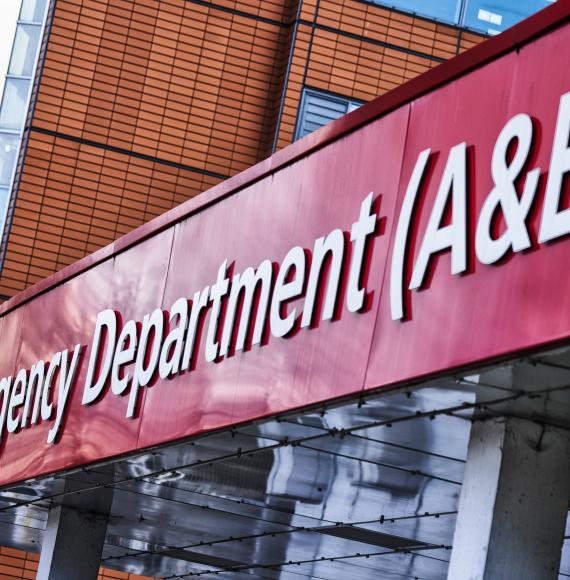
He highlighted the impact poor social care provision has on the health service, particularly through increased pressure on accident and emergency departments and delays in discharging patients from hospital because appropriate care packages are not available.
The existing Triple Lock will remain in place for the rest of the current Parliament, with ministers estimating that the State Pension will rise by more than £2,000 during that period.
From April 2030, however, an adjusted version of the policy will be introduced. Under the revised system, the State Pension will increase annually by either inflation or 2.5%, whichever is higher. Additional rises would also be applied where necessary to maintain the pension's value relative to average earnings.
According to the Government, the approach will ensure pensioners continue to benefit from wage growth while protecting them when inflation rises sharply.
Officials stressed that pensions would never decrease under the new arrangement and argued that the reform would place the State Pension on a financially sustainable footing for the long term.
The Government will legislate for the changes during the current Parliament.
Ministers estimate that adjusting the Triple Lock could reduce state pension expenditure by around £15bn annually by the late 2030s, rising to approximately £50bn a year by 2050.
The proposed National Care Service would eventually provide personal care free at the point of use for older people, covering support with everyday activities such as eating, bathing and using the toilet.
The Government says the reform will help address inconsistencies in the current system, where individuals with similar care needs can face significantly different financial responsibilities depending on whether their condition is categorised as a health or social care issue.
Around three-quarters of adults aged over 65 are expected to require care and support during later life, while one in seven may face costs exceeding £100,000 under the current system.
The Prime Minister said the plans would provide a fairer and more consistent approach for older people and their families.
The service will not cover accommodation or food costs, with existing means-tested council contributions remaining in place. Current safeguards protecting family homes will also continue, including exclusions where a partner or dependent relative remains living in the property. Deferred payment agreements will also remain available to help eligible individuals avoid selling their homes during their lifetime to fund care.
While the broad vision for the National Care Service has now been established, detailed recommendations on implementation will be developed by the independent commission led by Baroness Louise Casey.
The commission is currently gathering evidence through public engagement, cross-party discussions and its wider "Big Conversation on Care" initiative. Its final report is expected in summer 2027.
The announcement forms part of the Government’s wider programme of tackling complex social and economic challenges that successive administrations have struggled to resolve.
Supporters argue that the reforms could provide greater certainty for older people and reduce pressure on NHS services. However, questions are likely to be raised about whether projected savings from the reformed Triple Lock will be sufficient to fund the scale of transformation required across social care.
With demand for care expected to rise significantly over coming decades, the National Care Service proposal is likely to become one of the most closely watched health and social care policy developments ahead of the publication of Baroness Casey’s recommendations next year.
Image credit: iStock