


The NHS in England is facing a significantly larger nursing workforce crisis than official vacancy figures suggest, according to a new report from the Royal College of Nursing.
The report, In Short Supply: Estimating the Shortfall of Registered Nurses in the NHS in England, estimates that the health service is currently lacking around 55,000 registered nurses needed to provide safe patient care. This figure is more than double the official NHS vacancy count of 23,046 recorded in August 2026.
The findings highlight growing concerns about the ability of NHS organisations to meet increasing patient demand, with workforce growth failing to keep pace with what experts believe is required.
While the nursing workforce has expanded slightly over the past year, growth remains insufficient. Registered nurse numbers increased by just 1%, whereas workforce experts estimate that annual growth of between 2.5% and 5.7% is needed to meet demand safely and sustainably.
The RCN is calling on the Westminster Government to address the issue through the forthcoming NHS Workforce Plan and is urging ministers to ensure NHS trusts receive the funding required to recruit and retain enough nursing staff.
The report also points to a long-term imbalance in workforce investment. Since 2009, nursing numbers have not grown at the same pace as other clinical professions, particularly doctors.
According to the analysis, if investment in nursing had matched the growth seen in the medical workforce, the NHS in England would now have more than 77,000 additional registered nurses.
Professor Nicola Ranger, RCN General Secretary and Chief Executive, said:
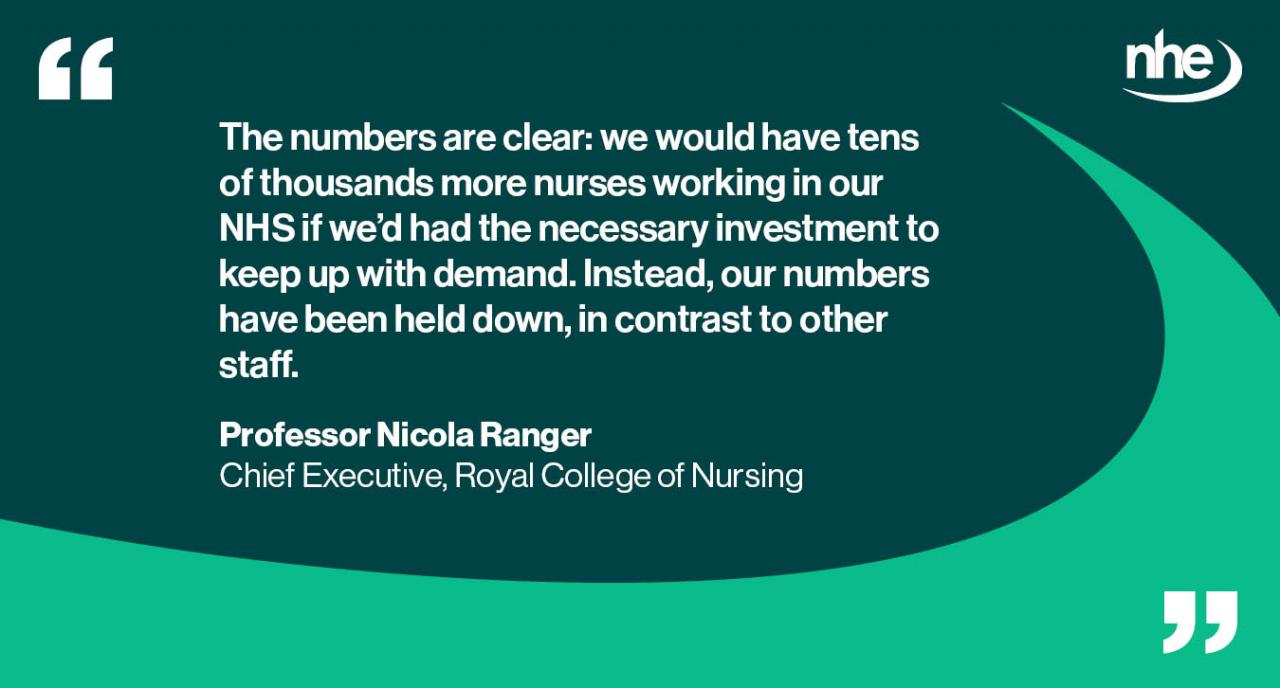
“The numbers are clear: we would have tens of thousands more nurses working in our NHS if we’d had the necessary investment to keep up with demand. Instead, our numbers have been held down, in contrast to other staff.
“When you have too few registered nurses, you get longer hospital stays, worse outcomes and more pressure on an already burned out and exhausted workforce."
The report argues that persistent underinvestment in nursing has left trusts struggling to recruit sufficient staff, despite growing demand from an ageing population and increasing patient complexity.
Alongside workforce analysis, the RCN reviewed hospital trust board papers which revealed hundreds of patient safety incidents linked to nursing shortages.
Reported incidents included delays in administering pain relief, missed medications, delays to essential treatments and failures to deliver planned care. Some trusts also reported patient falls, fractures and avoidable deterioration linked to inadequate staffing levels.
One registered nurse working in a hospital in the East of England described the impact shortages are having on patient care:
“Patients are staying in hospital for far longer because the quality of care they receive is worse. We’re so busy, you can only deal with the immediate task in front of you. That means you can’t do any prevention work, and they are less prepared for going back into the community and more likely to be re-admitted."
Meanwhile, a charge nurse working in the West Midlands highlighted the sustained staffing pressures facing frontline teams:
“Our unit has not had a fully staffed shift for more than six months.”
They added that staffing shortages have resulted in delays to vital medications, including treatments for patients with Parkinson's disease and sepsis, while financial pressures have left wards struggling to purchase basic supplies as well as recruit additional staff.
The RCN says the evidence demonstrates a direct link between nurse staffing levels and patient outcomes, and warns that ongoing shortages are placing both patients and healthcare professionals at increasing risk.
Professor Ranger added:
"This report is more undeniable evidence of the clear link between registered nurse staffing levels and patient harm. It's utterly shocking that sick patients should wait hours for pain relief or vital medication, while some are falling, breaking bones and deteriorating needlessly.
“The truth is patient safety incidents aren’t isolated, and trusts are recording hundreds each month due to registered nurse shortages.”
The report also references previous research commissioned by the RCN, which found that nursing is often disproportionately affected when health budgets come under pressure.
International workforce expert Professor James Buchan argued that delivering a sustainable nursing workforce will require significant expansion of domestic nurse education, stronger retention measures and a more robust, long-term approach to workforce planning.
He said a consistent national workforce strategy is essential to ensure nursing is no longer the profession that bears the brunt of financial constraints.
As the Government prepares its next NHS Workforce Plan, healthcare leaders will be watching closely to see whether nursing receives the level of investment many believe is necessary to meet future demand and safeguard patient care.
Image credit: iStock