

A major update to national fertility guidance has introduced a dedicated section specifically for people with endometriosis who are struggling to conceive, marking a significant step forward in improving access to personalised fertility care.
The change appears in the updated NICE fertility guideline, published to coincide with the final day of Endometriosis Action Month, following strong feedback from patients, charities, clinicians and professional bodies.
Endometriosis affects around 1.5 million people in the UK and is one of the most common causes of fertility problems. The condition occurs when tissue similar to the lining of the womb grows elsewhere in the body, often causing severe pain, inflammation and long‑term complications.
Despite its prevalence, patients have long reported confusion and inconsistency in fertility care, with endometriosis often grouped under “unexplained infertility”. During consultation, organisations including Endometriosis UK told NICE this approach was inappropriate for a diagnosed medical condition.
NICE’s independent committee agreed, and for the first time has introduced a distinct, tailored fertility pathway for people with endometriosis.
Respondents to the consultation highlighted that terms such as “mild” and “severe” endometriosis do not reflect the complexity of the condition or its varied impact on fertility. The committee has removed these terms from the final guideline, acknowledging that they can lead to misunderstanding, misdiagnosis or delays in treatment.
This year’s Endometriosis Action Month theme, which is that “Endometriosis Doesn’t Wait”, resonates strongly with the new guideline. While the update does not address diagnostic delays directly, it sends a clear signal that once diagnosed, patients should not face additional barriers when trying to start a family.
Under the new recommendations, clinicians must discuss a full range of options with patients with endometriosis who are trying to conceive. Decisions should consider:
- How long they have been trying for a pregnancy
- Their symptoms
- Age
- Ovarian reserve
- Any male fertility factors
The guideline outlines a step‑by‑step pathway:
- Expectant management (time to conceive naturally), where appropriate
- Surgical treatment for endometriosis in line with NICE guideline NG73
- If neither approach is suitable or successful after two years, clinicians should offer fertility treatments such as IUI AND IVF.
The aim is to ensure people with endometriosis receive consistent, evidence‑based fertility support tailored to their individual reproductive health needs.
Interim Director of NICE’s Centre for Guidelines, Eric Power, commented:
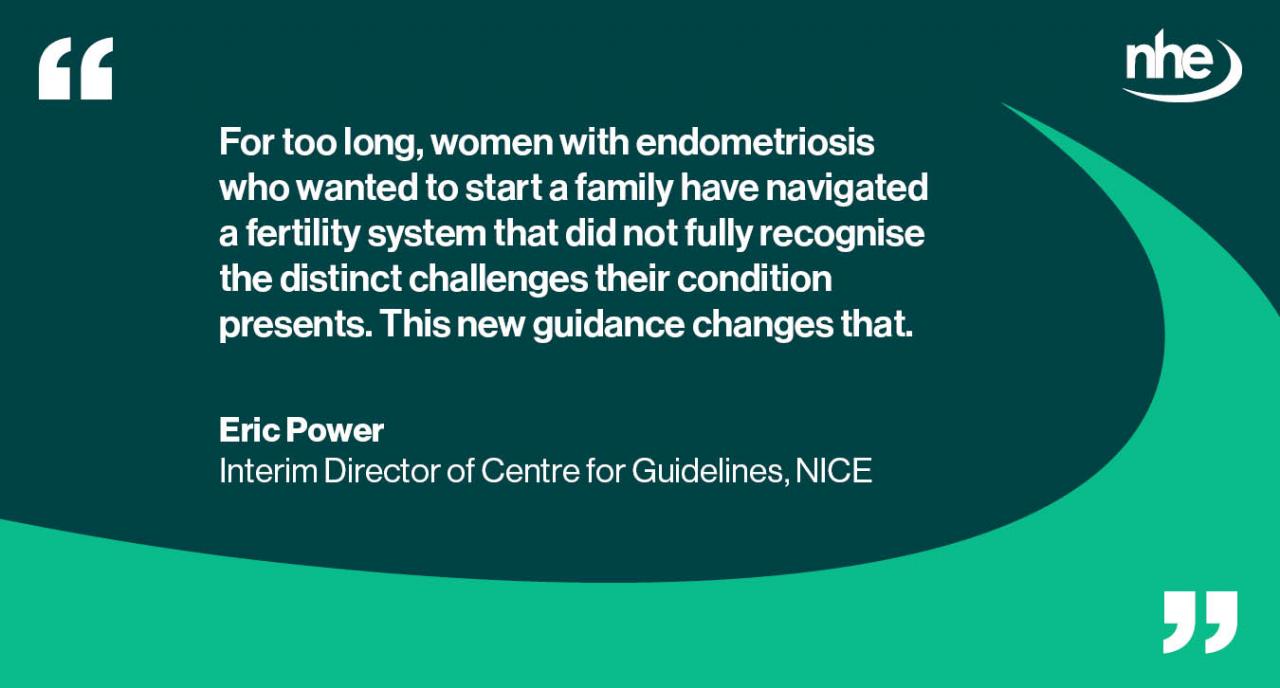
“For too long, women with endometriosis who wanted to start a family have navigated a fertility system that did not fully recognise the distinct challenges their condition presents. This new guidance changes that.
"We listened carefully to what patients, clinicians and patient groups told us during consultation. They described how complex endometriosis is, how they felt existing labels were misleading, and that the condition needed its own pathway. The committee agreed and acted on that feedback.
"By creating a dedicated section for endometriosis, we are giving clinicians a clear, evidence-based framework to have better, more personalised conversations with their patients, ensuring that everyone, regardless of the cause of their fertility problems, has access to the right care at the right time."
Clearer pathways for endometriosis will help ensure services are better aligned and delivered consistently across England.
The final guideline also confirms several additional updates, including stopping fertility clinics from offering unproven “add‑on” treatments that lack evidence of effectiveness, broadening access to NHS‑funded fertility preservation, extending eligibility beyond cancer patients, and additional clarifications to strengthen clinical best practice.
The new guidance, shaped directly by patient and expert feedback, represents a significant step toward ensuring people with endometriosis receive the fair, timely and personalised fertility care they deserve.
Image credit: iStock