

A pioneering mental health service supporting university students across Greater Manchester has been highlighted as a national example of best practice in a new report published by the Department for Education.
The Greater Manchester Universities Student Mental Health Service, run by Greater Manchester Mental Health NHS Foundation Trust in partnership with regional higher education institutions, has been praised for its innovative, collaborative model, which tackles the growing mental health needs of young people in higher education.
Since 2017, mental illness among young people has risen sharply, with 17–24‑year‑olds now experiencing the highest rates of common mental health conditions. Students face a unique combination of academic and life pressures including moving away from home, financial strain, and adapting to new responsibilities, circumstances that can intensify vulnerability during a formative stage of life.
Mainstream NHS mental health services are not always designed with students’ specific circumstances in mind, while university wellbeing teams can experience overwhelming demand. This has left many students falling between service gaps, waiting long periods for help, or deteriorating before receiving support.
The DfE’s January report emphasises the growing need for tailored, joined‑up provision, calling for strengthened partnerships between NHS services and universities across the country.
GMUSMH is showcased as an early and effective adopter of this model.
GMUSMH is delivered collaboratively by GMMH and seven higher education partners:
- University of Greater Manchester (Bolton)
- University of Salford
- Manchester Metropolitan University
- University of Manchester
- Royal Northern College of Music (RNCM)
- dBs Institute
- UCEN Manchester
The service supports students enrolled across these institutions through a single referral pathway, ensuring consistent access to timely, needs‑based mental health assessment, treatment and support.
Its core aim is to help students fulfil their university ambitions by providing responsive mental health care that recognises their academic and personal challenges.
The DfE report outlines a series of measurable successes since the service launched, including:
- 25% reduction in A&E presentations,
- 9% reduction in referrals to urgent and emergency liaison mental health services,
- 19% reduction in community mental health service referrals,
- reductions in self‑harm, safety concerns and unhealthy weight,
- more efficient processes and reduced workload for university wellbeing staff,
- improved collaboration and communication between NHS and university teams.
These outcomes demonstrate the effectiveness of tailored, cross‑sector support – reducing pressure on emergency and community services while ensuring students receive the help they need earlier and more consistently.
Highlighting the service on University Health Day, GMMH emphasised that GMUSMH offers a blueprint for national reform. As the Government consults on SEND reforms and undertakes an independent review into mental health conditions, ADHD and autism, the Greater Manchester model offers a working example of how coordinated support can transform student wellbeing.
Dr Rosey Tattersall, Consultant Psychologist and Clinical Lead at the GMUSMH, commented:
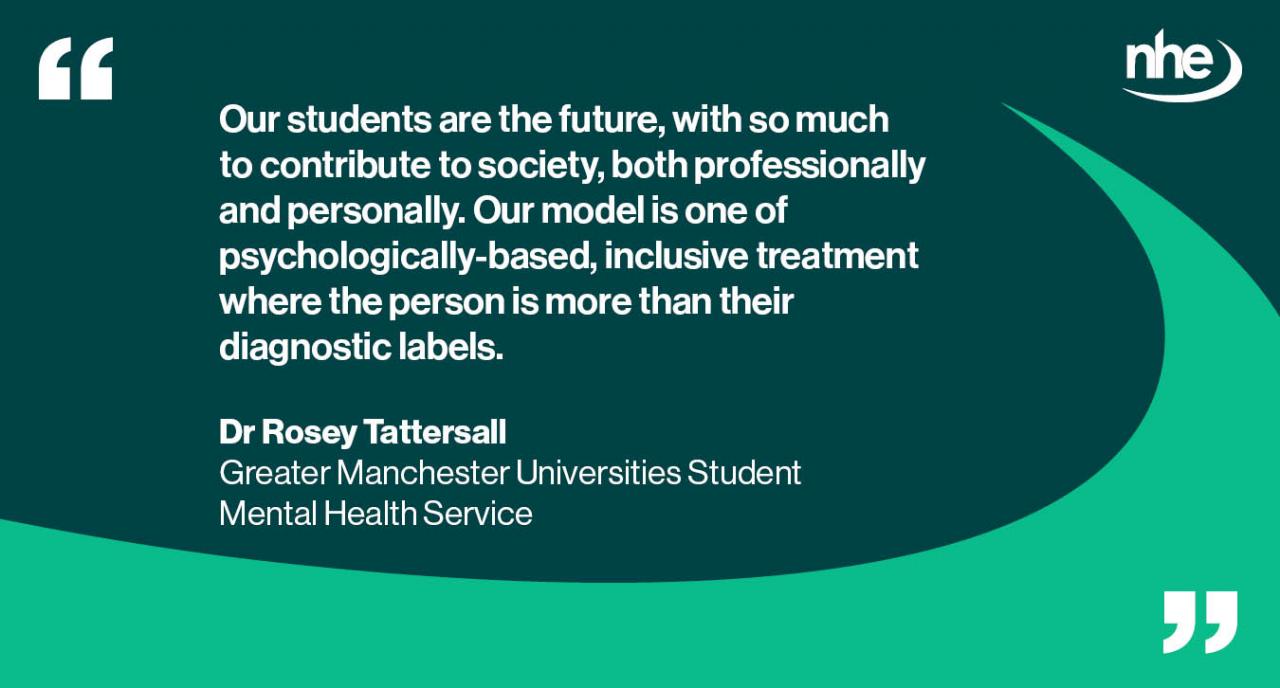
“Our students are the future, with so much to contribute to society, both professionally and personally. Our model is one of psychologically-based, inclusive treatment where the person is more than their diagnostic labels.
“We work with students to develop an understanding of the challenges they are facing, how these may have developed, and how previous life experiences may have contributed. Together we then work to create an understanding of how these experiences, and their mental health difficulties, can create barriers to independent life and studies. From there, we use a ‘psychological safety’ approach to collaboratively facilitate changes that can be taken forward into adult life.”
With rising demand for mental health support among students, the service’s success provides compelling evidence for expanding this kind of integrated approach across the UK.
Image credit: iStock