

A new briefing has revealed that neurodivergent children and young people continue to experience disproportionately high levels of mental health difficulties, while current services often fail to meet their needs.
Published by the Centre for Mental Health, Strengths‑based support for neurodivergent children and young people summarises recent research from the University of York, shedding light on why so many neurodivergent children experience distress and what effective, strengths‑based support should look like.
According to the briefing, up to 70% of neurodivergent children and young people experience significant mental health problems at some stage of their school years, with autistic girls and young people from racialised communities facing particularly high levels of difficulty.
The authors argue that mental health provision for neurodivergent children must be reframed. Rather than treating neurodivergence as a problem, support should be considered a reasonable adjustment – a necessary step in reducing barriers and enabling children to flourish.
The briefing calls for a system that:
- recognises and builds on neurodivergent strengths
- reduces environmental and systemic barriers
- provides support that reflects the realities of children’s daily lives, including communication styles and sensory needs
Emerging approaches, such as Play‑brick therapy, demonstrate how tailored interventions can help neurodivergent children communicate their feelings. Evidence shows this method can improve social skills, reduce isolation and support emotional regulation.
The release of the briefing comes at a critical time. The Government is currently consulting on SEND reform as part of the Schools White Paper 2026, while also conducting an independent review into mental health conditions, ADHD and autism.
Against this backdrop, the briefing urges mental health services to adapt to children, rather than expecting children to mould themselves to unsuitable systems. This includes designing services that meet neurodivergent communication and sensory needs.
Centre for Mental Health Chief Executive Andy Bell commented:
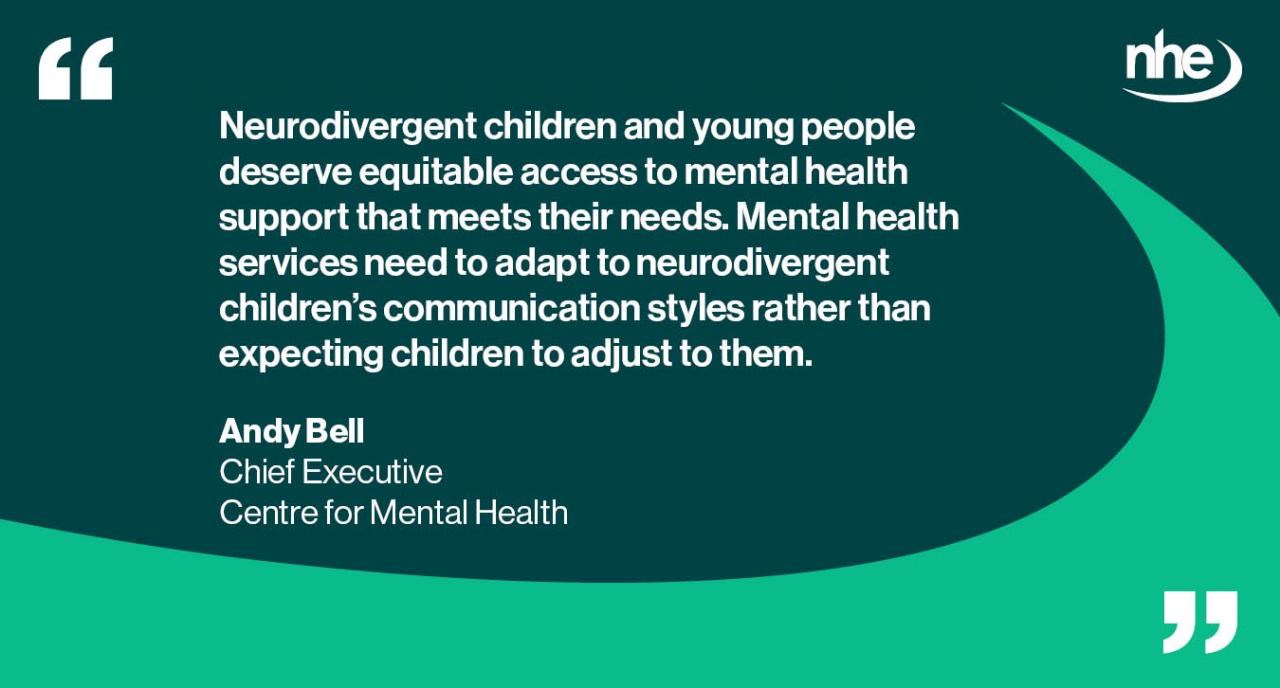
“Neurodivergent children and young people deserve equitable access to mental health support that meets their needs. Mental health services need to adapt to neurodivergent children’s communication styles rather than expecting children to adjust to them. And neurodivergence should never be a reason to exclude a child from a mental health service. The research we have reviewed from the University of York demonstrates that by following the available evidence, mental health support for neurodivergent children and young people can be effective and make a difference.”
The Centre for Mental Health warns that without meaningful change, large numbers of neurodivergent children will continue to face avoidable distress. The briefing emphasises that strengths‑based, inclusive and accessible support can significantly improve wellbeing, and should become standard practice across education and healthcare settings.
Image credit: iStock