

A human challenge trial supported by the National Institute for Health and Care Research has shown that a new vaccine, BPZE1, could offer stronger protection against whooping cough and help prevent its spread.
The breakthrough comes as the UK Health Security Agency reports that 2024 saw the highest number of whooping cough cases in 30 years, with 14,879 confirmed cases and 11 infant deaths.
Whooping cough, or pertussis, is a highly contagious respiratory infection that can be deadly for babies. Current vaccines are part of routine childhood immunisations in the UK but do not provide lifelong protection or stop people from carrying and spreading the bacteria.
The CHAMPION-1 study, conducted at the NIHR Southampton Biomedical Research Centre and Clinical Research Facility, tested BPZE1 – a weakened version of the bacteria – delivered as a single nasal spray.
Key findings:
- BPZE1 was safe and well tolerated, with no serious side effects.
- Most vaccinated participants had little or no bacteria in their nose after exposure, reducing the risk of transmission.
- The vaccine triggered strong immune responses in both the nose and blood, suggesting potential long-lasting protection.
The trial involved 53 adult volunteers who were vaccinated or given a placebo, then exposed to the bacteria in a controlled setting. Participants stayed in quarantine for 16 nights, and all received antibiotics before leaving.
This is the first study to show a vaccine can stop the bacteria from colonising the nose and throat, a critical step in preventing spread. With further trials and regulatory approval, BPZE1 could be offered to adults and children.
Ashley Dalton, Public Health Minister, said:
"This government-supported trial marks a major breakthrough in our fight against whooping cough.
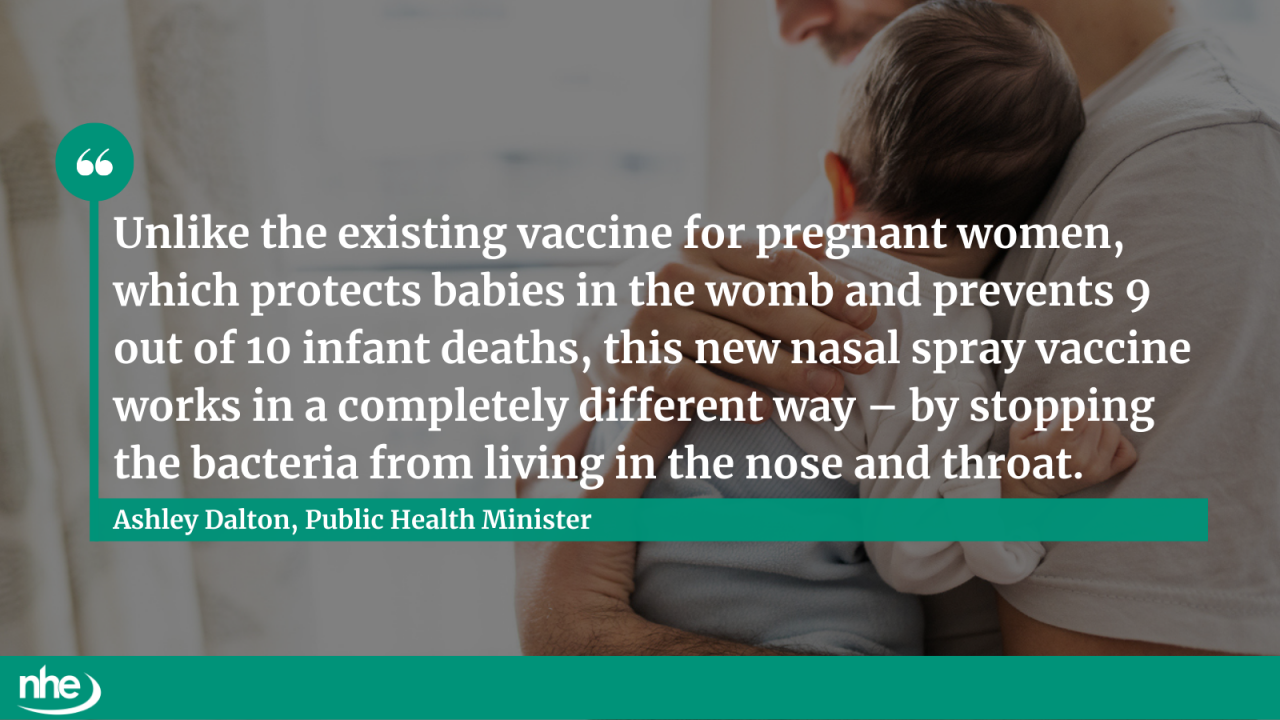
"Unlike the existing vaccine for pregnant women, which protects babies in the womb and prevents 9 out of 10 infant deaths, this new nasal spray vaccine works in a completely different way – by stopping the bacteria from living in the nose and throat. That means it could cut transmission and offer longer-lasting protection for everyone, not just newborns.
"It’s a powerful showcase of the UK’s world-class research sector driving innovation to protect future generations."
The research was sponsored by ILiAD Biotechnologies and delivered in partnership with University Hospital Southampton, the University of Southampton, and the University of Oxford. Results are published in The Lancet Microbe.
Leader of the study at the NIHR Southampton BRC, Professor Robert Read, added:
“This is the first time a whooping cough vaccine has been shown to prevent the bacteria from colonising the nose and throat in humans. That could represent a big step forward in stopping the spread of the disease.”
Since 2012, the UK has offered a pertussis vaccine to pregnant women, which provides 91% protection against infant death. However, the resurgence of cases highlights the urgent need for improved vaccines to protect all age groups.
Image credit: iStock