

Every maternity service in England will be required to meet new national clinical standards designed to significantly reduce the number of women who die during or after pregnancy, under measures announced by the NHS.
The standards form part of a strengthened maternal care bundle, aimed at tackling the leading causes of maternal death and ensuring risks are identified and treated earlier, with consistent oversight at local, regional and national level.
All pregnant women will now be offered an early risk assessment for venous thromboembolism (VTE) – blood clots in deep veins – before their first antenatal appointment.
Blood clots are now the leading cause of maternal mortality. Women identified as being at high risk will be offered thromboprophylaxis (preventative blood thinners) within 72 hours, reducing the chance of clots developing during pregnancy or after birth.
Women with epilepsy will have access to a local specialist epilepsy‑in‑pregnancy team, ensuring care plans are tailored to manage seizures safely.
Each woman will be supported with a personalised plan, including timely access to medications that are safe to use during pregnancy, helping to reduce avoidable harm linked to uncontrolled seizures.
The standards also strengthen access to maternal medicine centres, 17 specialist hubs across England that provide rapid expert care for women with pre‑existing medical conditions or complications that arise during pregnancy.
Mental health care will be given greater emphasis, with women routinely assessed using a consistent set of questions at antenatal appointments.
Assessments will be documented and women referred to specialist NHS perinatal mental health services where appropriate, ensuring timely access to support.
Between 2022 and 2024, suicide remained the leading cause of maternal death occurring between six weeks and one year after pregnancy, accounting for 33% of deaths from psychiatric causes during that period.
The NHS said early identification and referral is essential to preventing crisis and saving lives.
Women experiencing significant bleeding or haemorrhage after giving birth will receive specialist care sooner, supported by new national thresholds that trigger earlier escalation.
Under the new standards, specialist obstetricians and anaesthetists will be involved more quickly, improving outcomes for one of the most serious obstetric emergencies.
The full roll‑out of the maternity care bundle across England is expected by March 2027.
The NHS estimates these measures could reduce deaths from blood clots, strokes, cardiac disease, suicide, sepsis, obstetric haemorrhage and pre‑eclampsia — which together account for 52% of maternal deaths.
Progress against each standard must be reported to NHS trust boards, with escalation to regional and national oversight where delivery does not meet expectations.
As part of the changes, maternity units will receive facility upgrades, including direct telephone lines to maternity teams to help ambulance crews transfer women to labour wards more quickly.
New monitoring equipment will also be introduced to detect deterioration earlier. Up to £5 million has been allocated to NHS trusts this year to support implementation of the maternal care bundle.
The announcement builds on the recent roll‑out of the Maternal Outcomes Signal System (MOSS), which is a digital tool that analyses routine maternity data to identify emerging safety concerns in real time.
The NHS has committed to publishing MOSS findings every six months, increasing transparency and ensuring action is taken promptly where risks are identified.
Maternal death remains rare in England, but the majority of deaths are linked to medical conditions that pre‑date or develop during pregnancy, such as blood clots, strokes and heart disease, which can be missed or misattributed to normal pregnancy symptoms.
Between 2022 and 2024, there were 252 maternal deaths, compared with 257 between 2021 and 2023. Reviews have shown that improvements in care may have altered outcomes in 45% of cases, highlighting the potential impact of the new standards.
The new best‑practice standards were developed with frontline clinicians, women and families, alongside Royal Colleges, regulators, professional societies and charities.
They are aligned with findings from MBRRACE‑UK reports, which identify the leading causes of maternal deaths and areas where earlier intervention could save lives.
Chief Midwifery Officer for England, Kate Brintworth, said:
“Every death during or after pregnancy is a tragedy especially when differences in care may have changed the outcome.
“We still see symptoms of serious medical problems being missed, especially for Black and Asian women.
“By setting out these clinical standards and holding hospitals to account we can significantly reduce avoidable deaths and prevent future tragedies.
“1 in 5 women will have a medical issue during pregnancy, yet many of these aren’t caught early enough – these measures, including more risk assessments in early pregnancy, will ensure no stone is left unturned.”
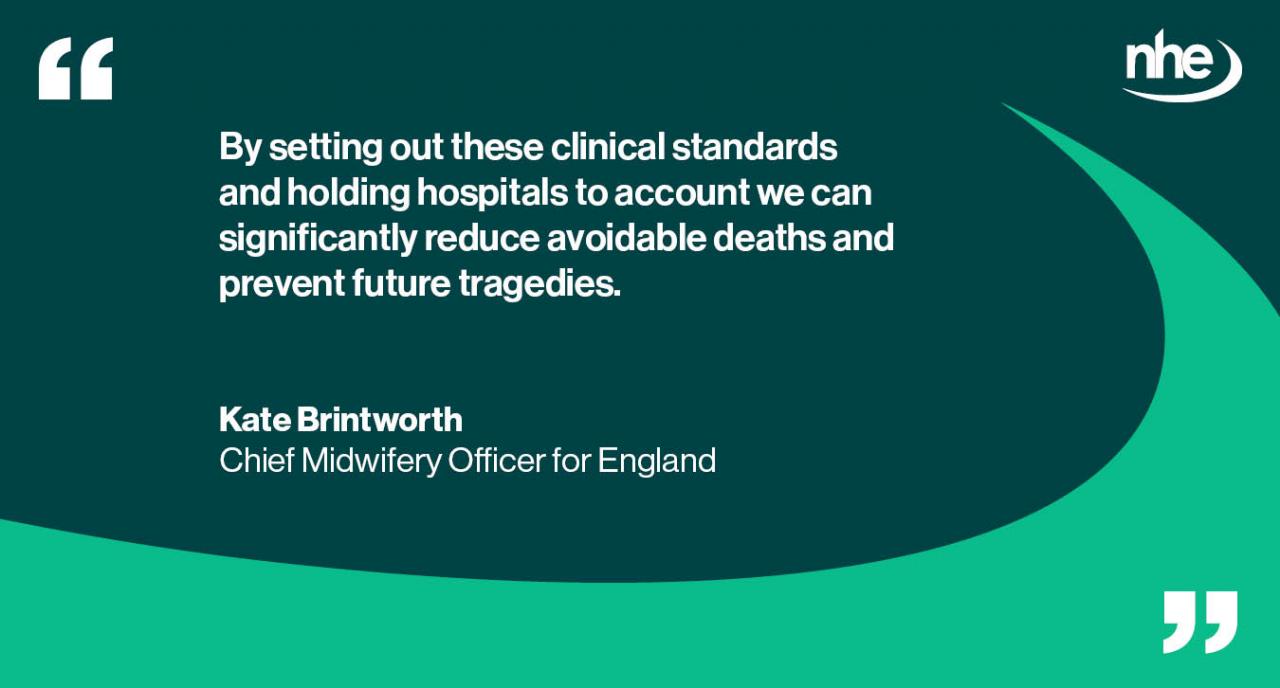
Image credit: iStock