


People across England living with certain types of chronic heart failure could soon benefit from a new treatment option, after NICE issued final draft guidance recommending finerenone for use on the NHS.
The decision focuses on adults with chronic heart failure with preserved or mildly reduced ejection fraction (HFpEF/HFmrEF) – a condition that affects how the heart fills with blood rather than how it pumps it out.
Heart failure with preserved or mildly reduced ejection fraction occurs when the left side of the heart does not fill properly during the diastolic phase. While the reduction in blood flow is less severe than in heart failure with reduced ejection fraction, the condition still places a significant burden on patients and services.
Symptoms such as breathlessness, fatigue and ankle swelling often lead to repeated hospital admissions, with a profound impact on patients’ independence and quality of life. The challenge is compounded by the fact that many patients also live with multiple long-term conditions, including chronic kidney disease, diabetes and hypertension.
With these comorbidities making treatment pathways more complex, clinicians have long faced a gap in effective, well-tolerated therapies for this group.
Finerenone is a nonsteroidal mineralocorticoid receptor antagonist (MRA), offering a key distinction from existing steroid-based MRAs. This difference means it may be suitable for a broader group of patients who may not tolerate older therapies.
By targeting pathways linked to inflammation and fibrosis, finerenone has the potential to:
- Reduce the risk of disease progression
- Improve quality of life outcomes
- Lower rates of unplanned hospital admissions
For NHS providers, this introduces a treatment that not only improves patient care but may also support system efficiency and capacity management.
The scale of potential impact is considerable:
- Around 635,000 people in England are living with heart failure
- Approximately half have preserved or mildly reduced ejection fraction
- There were 100,000 hospitalisations linked to heart failure in 2023–24
- Up to 280,000 patients could be eligible for finerenone
These figures highlight why heart failure remains one of the leading causes of avoidable hospital admissions, placing sustained pressure on urgent and emergency care pathways.
NICE has emphasised both clinical and economic benefits in its decision, positioning the treatment as a way to improve outcomes while delivering value for money.
Helen Knight, Director of Medicines Evaluation at NICE, said:
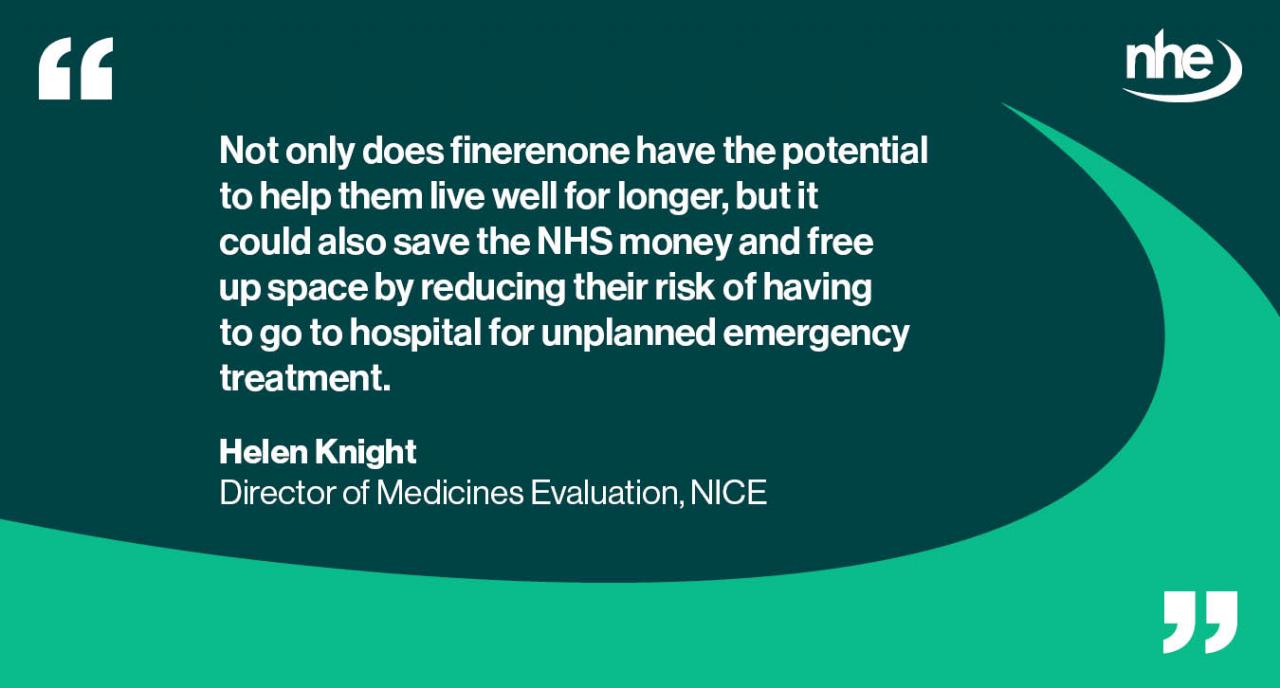
“We’re committed to bring the best care to people fast, while at the same time ensuring value for money for the taxpayer. Today’s final draft guidance means there is a further effective treatment available on the NHS for people with this type of heart failure. Not only does finerenone have the potential to help them live well for longer, but it could also save the NHS money and free up space by reducing their risk of having to go to hospital for unplanned emergency treatment.”
For NHS managers and commissioners, the recommendation signals:
- Expanded therapeutic options for a previously underserved patient group
- Opportunities to reduce emergency admissions and bed occupancy
- A potential lever for delivering cost savings alongside improved outcomes
- The need to plan for adoption, including pathway integration and clinician awareness
As systems continue to grapple with demand pressures, particularly in urgent and emergency care, interventions that can reduce avoidable admissions will be closely scrutinised for rapid uptake.
Image credit: iStock