

The National Institute for Health and Care Research has unveiled a major new funding programme designed to tackle some of the biggest challenges facing the UK health and care system.
The first round of Strategic Infrastructure Partnerships will make up to £45 million available to support ambitious, large-scale collaborations aimed at generating evidence, accelerating innovation and improving patient outcomes across England.
SIPs represent a new form of long-term NIHR infrastructure funding, bringing together expertise, resources and capabilities from across the health and care ecosystem. The initiative is intended to address complex challenges that cannot be solved by a single organisation, research discipline or infrastructure programme working alone.
The new partnerships are closely aligned with the ambitions set out in the Government's 10-Year Health Plan for England, particularly the shift away from hospital-based care towards more preventative and community-focused models of support and treatment.
For the inaugural funding round, applications are being sought in two key areas:
- Technologies that enable people to live well and independently at home
- Reducing demand across urgent, emergency and primary care services
Organisations can apply for up to £15 million per Strategic Infrastructure Partnership, with awards expected to run for between three and five years.
The NIHR said SIPs will focus on accelerating the translation of research into tangible improvements for patients and communities by connecting expertise across the translational research pathway.
By bringing together researchers, industry partners, charities, local government and healthcare providers, the programme aims to create a more connected and responsive research ecosystem capable of delivering evidence at scale and supporting the adoption of innovative solutions.
Importantly, the partnerships are designed not only to fund high-quality research but also to overcome barriers to implementation, ensuring promising innovations reach the people and communities who need them most.
The initiative is expected to drive improvements on both a national and local level, helping tackle common challenges faced by communities across England while delivering system-wide benefits for the NHS and social care sector.
Minister for Health Innovation, James Frith, said:
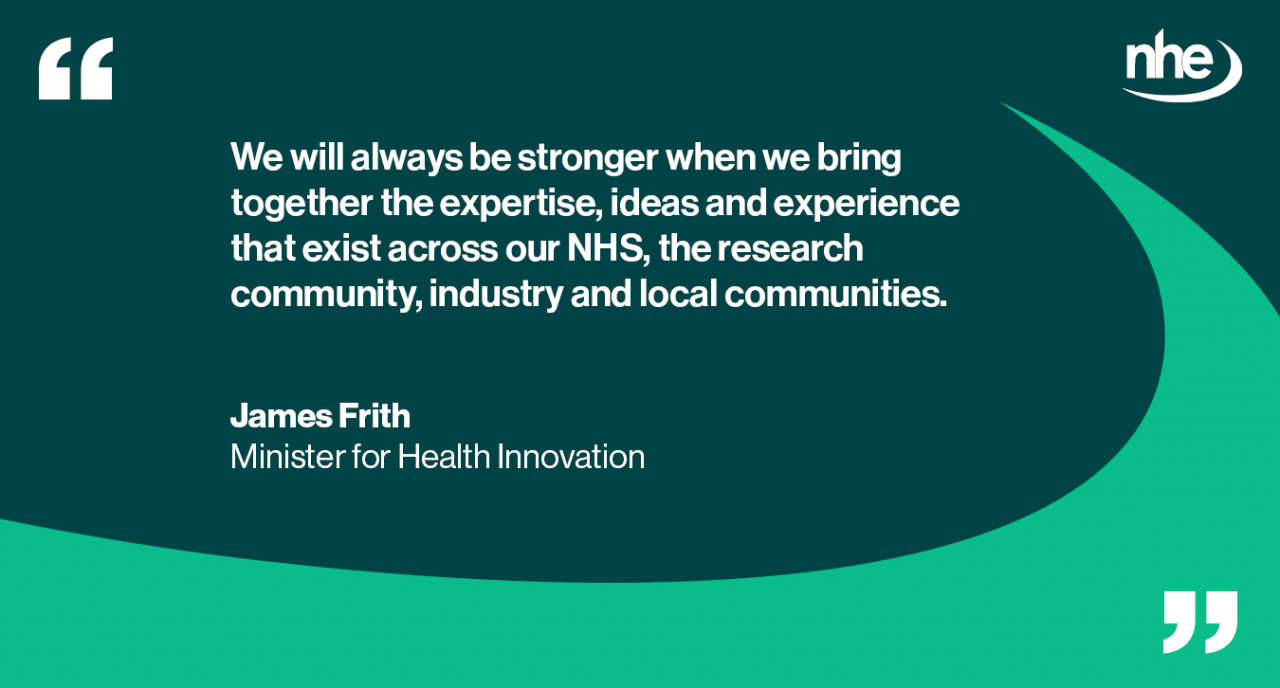
“We cannot solve the biggest challenges facing our health and care system through any one organisation working alone. We will always be stronger when we bring together the expertise, ideas and experience that exist across our NHS, the research community, industry and local communities.
“These new Strategic Infrastructure Partnerships will help us do exactly that – tackling challenges both locally and at a national scale, and turning the very best research and innovation projects into practical improvements for patients and communities across the country.
“This is the 10-Year Health Plan in action: harnessing innovation and technology to help reduce pressure on urgent, emergency and primary care, while ensuring that the health service is always there for everyone when they need it, and where they need it.”
Professor Lucy Chappell, Chief Scientific Adviser to the Department of Health and Social Care and CEO of the NIHR, said:
“As the NIHR celebrates 20 years, it is looking for bold ideas and ambitious teams to lead these new, transformational partnerships. Our research infrastructure is full of passionate experts, with boundless experience. We want them to unite, combining their strengths with industry, local government, charities and many other partners, to accelerate exciting innovations and research to deliver real, lasting impact for patients across the country, and to drive economic growth.”
The SIP model has been designed to foster collaboration across organisations and sectors, supporting challenge-led, multidisciplinary partnerships focused on delivering measurable impact.
As healthcare systems continue to face increasing pressures, NIHR believes these partnerships will provide a powerful mechanism for creating evidence, supporting implementation and ensuring innovation is adopted more quickly and effectively.
With up to £45 million available in this first phase, the programme marks one of the most significant recent investments in collaborative health research infrastructure and could play a pivotal role in shaping how innovations are developed, evaluated and implemented across England's health and care system.
Image credit: iStock