

The Parliamentary and Health Service Ombudsman (PHSO) has launched a new five‑year strategy, setting out a renewed commitment to delivering fair, impartial justice for individuals while playing a stronger role in improving the quality of public services.
Covering the period from April 2026 to March 2031, the strategy outlines how the Ombudsman will become a more established and influential voice in raising standards and driving systemic change across the NHS, government departments and other public bodies.
The PHSO provides independent investigation of complaints about public services, ranging from issues with child maintenance, driving licences and immigration, to serious failings in the NHS, including delayed treatment, misdiagnosis and avoidable harm.
Through its casework, the Ombudsman offers redress to individuals while identifying patterns that point to broader service failures.
Alongside resolving individual complaints, the new strategy places greater emphasis on using complaints data and wider evidence proactively to identify risks, prevent harm and strengthen accountability.
The Ombudsman will take a more active role in highlighting systemic problems, ensuring lessons are learned and supporting improvements before failures escalate.
The strategy is built around three core priorities.
Firstly, the PHSO will focus on driving public service improvement, using evidence and insight to address systemic issues, increase transparency, work with partners to support standards, and track the real‑world impact of its recommendations.
Second, the organisation will work to improve the user experience, creating a clearer, more accessible and person‑centred service. This includes greater use of digital tools and AI‑enabled pathways to reduce delays and improve engagement for people raising concerns.
Third, the strategy aims to raise awareness and trust, strengthening the Ombudsman’s identity, supporting Parliamentary scrutiny and reaching individuals and communities whose voices are often under‑represented or unheard.
The strategy also signals a significant organisational change. In late 2026, the PHSO will change its name to become the Public Service Ombudsman.
The new name is intended to better reflect the organisation’s broader mission to improve public services, making it clearer to the public what the Ombudsman does and how complaints can help drive improvement, not just resolve individual cases.
The strategy launches at a time of increasing demand for Ombudsman services.
In the past year alone:
- The NHS received more than 256,000 written complaints, nearly double the number from a decade ago
- The PHSO considered over 43,000 complaints, an increase of more than 14% on the previous year
Parliamentary and Health Services Ombudsman Paula Sussex CBE said:
“Public services are under immense pressure, and trust between citizens and the state is fragile. Mistakes will happen – how those mistakes are addressed, and what is learned from them, is crucial to rebuilding that trust.
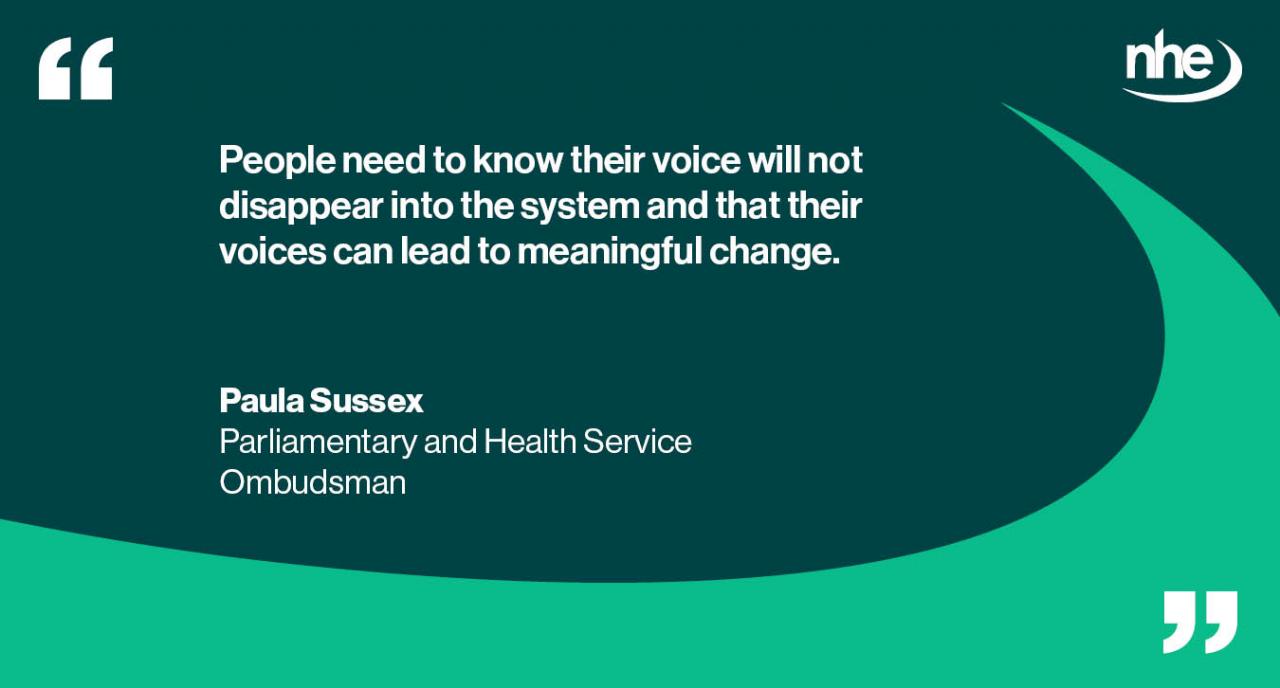
“People need to know their voice will not disappear into the system and that their voices can lead to meaningful change.
“Our strategy marks a new chapter. Alongside delivering fair outcomes for individuals, we will take a more active role in helping public services learn from mistakes, prevent harm and improve for everyone.
“This means identifying risks earlier, identifying and tackling root causes with partners, and strengthening accountability across public services.
“Our name change reflects our mission — creating a clear, recognisable identity so people can find us, understand what we do, and trust our role in shaping better public services.”
Rather than being seen as a last resort or administrative burden, complaints must be used to drive continuous improvement, reduce avoidable harm and improve outcomes for service users.
Through its new strategy, the Parliamentary and Health Service Ombudsman says it aims to ensure that individuals receive fair redress, public bodies are held to account, and lessons from complaints lead to lasting improvements in public services.
By strengthening its voice, modernising how it works and broadening its reach, the organisation believes it can play a central role in helping public services learn, improve and regain public trust.
Image credit: iStock