Antimicrobial resistance (AMR) is one of the most significant threats facing modern medicine. It is projected to be associated with 8.22 million deaths globally each year by 2050,1 placing increasing pressure on already stretched healthcare systems. Cepheid hosted an event with clinicians, scientists and healthcare leaders to explore how rapid diagnostics can improve care pathways, helping to effectively treat respiratory infections and minimise the spread of antimicrobial resistance. This article reflects on the key themes discussed, highlighting the practical role of rapid molecular testing in enabling timely treatment decisions, effective infection control and equitable access to care.
The UK’s National Action Plan (NAP) for antimicrobial resistance has identified improved diagnostics as a critical lever for reducing inappropriate antibiotic use and achieving its five-year goals:2 improving infection control; developing new diagnostics and treatments; optimising prescribing practices; providing surveillance data; and increasing international collaboration and education. Despite important progress, addressing remaining delays in deployment and gaps in diagnostic pathways will be essential to fully realise the aims of the UK NAP. High quality diagnostics are increasingly being recognised for their role in assisting earlier clinical decision-making and more effective antimicrobial stewardship.2
Diagnostics as a cornerstone of the UK AMR NAP
Diagnostic uncertainty remains a major driver of empirical prescribing, especially in acute and respiratory care, where clinicians must often act before laboratory results are available. The UK AMR NAP therefore emphasises the need to optimise diagnostic pathways to ensure antibiotics are prescribed only when clinically indicated. This extends to the diagnosis of any bacterial infection – not just AMR bacteria – to reduce unnecessary antimicrobial use.
Rapid diagnostics – including PCR-based screening – also play a critical role in infection prevention and control (IPC). Providing accurate results for colonisation and infection within hours rather than days can help enable timely escalation of IPC measures, such as isolation or cohorting decisions, and reduces the window of transmission in hospital settings.3 This can potentially help to limit avoidable transmission events and enable faster containment, reducing outbreak-driven disruption and preserving bed capacity during seasonal surges. As colonisation typically precedes infection, limiting avoidable transmission has the potential to help support broader efforts aligned with the UK AMR NAP’s five year target of preventing the incidence of Gram-negative bloodstream infections exceeding the 2019/2020 (financial year) baseline by 2029.2
Lessons from a CPE outbreak
The role of rapid diagnostics in helping control antimicrobial resistant infections is perhaps most clearly illustrated through hospital outbreak management. A well-documented example is the 2017–2018 outbreak of OXA-48-producing Klebsiella pneumoniae at University Hospitals of Leicester.3 During the outbreak, more than 900 patients were screened across 12 wards, identifying a total of 90 positive OXA-48 cases.3 The cost of infection control was predicted to be £350,000-400,000, including treatment with last-resort antibiotics, PPE, decontamination, staffing and lab screening.3 The introduction of PCR-based screening on admission reduced the time to detection of CPE carriage compared with culture-based methods, helping enable faster implementation of infection control measures to limit the potential for onward transmission, reducing the scale and duration of the outbreak. This case highlights that, despite the upfront costs of investing in molecular diagnostics, the associated costs of delayed detection – extended outbreaks, bed closures, increased PPE use and reliance on last-resort antibiotics – can be far greater. Rapid diagnostics should therefore be viewed as an important component of infection control strategies, which helps protect both patients and healthcare resources.
Earlier, more integrated respiratory testing
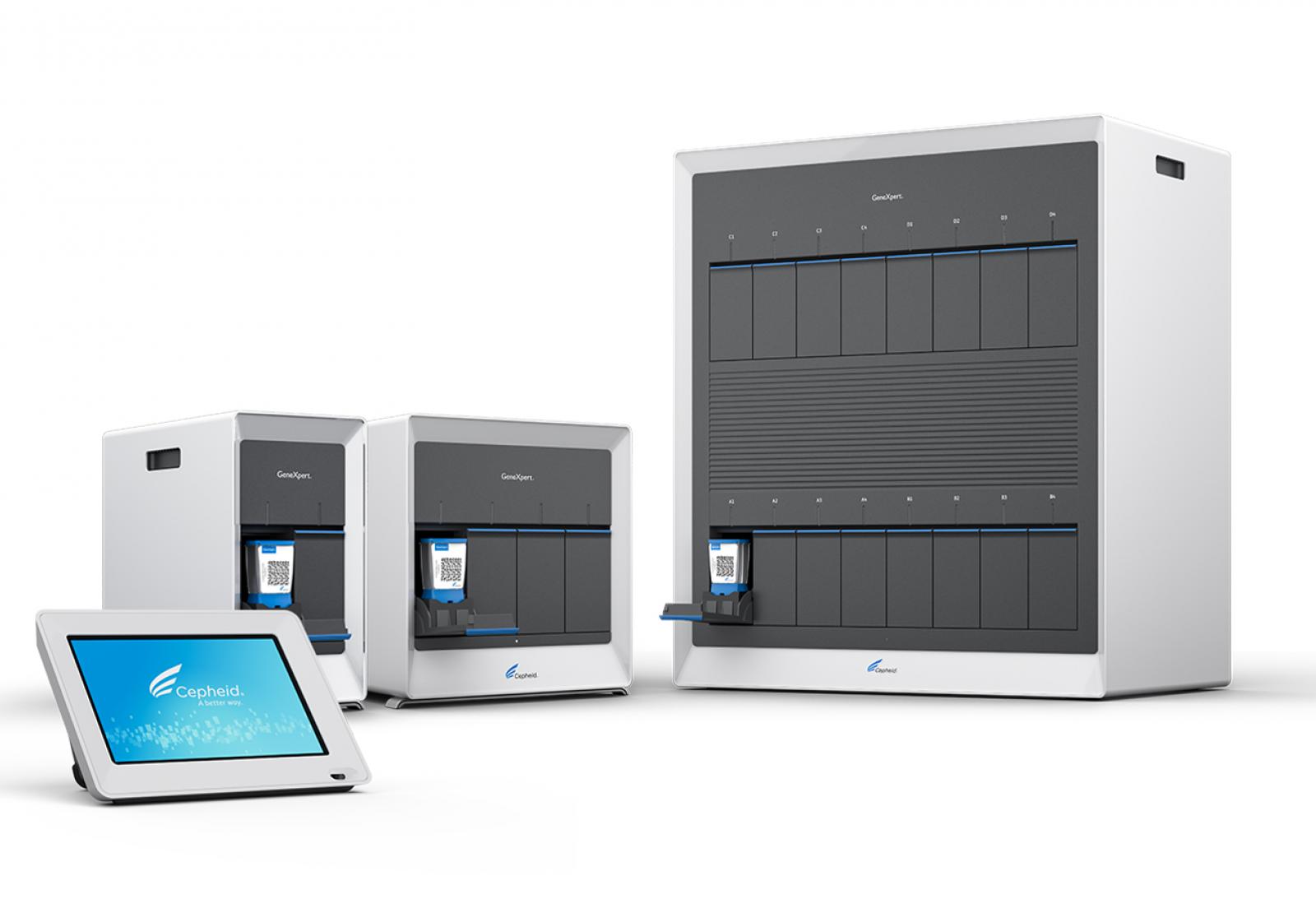
There is no one-size-fits-all approach to rapid diagnostics, and it is important that molecular testing is deployed according to the needs of the local healthcare services and population. For example, Berkshire and Surrey Pathology Services designed and implemented a decentralised rapid respiratory testing service across six sites to support acute care. The aim was to combine diagnostic quality with speed, delivering accurate results quickly at the point of need. The service can provide same-day molecular diagnostics for COVID-19, flu A, flu B and RSV, and was designed in collaboration with clinical, infection control and pathology stakeholders. The success of this service demonstrates that multidisciplinary collaboration – across pathology, infection control, clinical teams and operational leadership – is essential, and robust governance was crucial to ensure sufficient clinical oversight, comprehensive training, clear data reporting structures, and ongoing competency assessment and quality assurance.
There is growing interest in community-based test-and-treat pathways for acute respiratory infections to address NHS winter pressures and the wider AMR agenda. Early evaluation from a pilot pathway in primary care suggests that both clinicians and patients view community testing as the right approach to care.4 Embedding diagnostic testing earlier in the patient pathway in this way has the potential to be effective in terms of improving diagnostic certainty and antimicrobial stewardship.4 However, to support hospital AMR objectives, these pathways must be well integrated, equitably commissioned and governed to the same quality standards as acute services.
Equity in healthcare
Equity is a crucial consideration when designing rapid diagnostics services, as AMR does not affect all populations equally. Socioeconomic deprivation, ethnicity, age and geography can all influence exposure to resistant infections and access to timely diagnosis.5 Rapid testing may help to address this issue by reducing clinical uncertainty and unnecessary prescriptions, helping patients get the right treatment.2 Surveillance data associated with these services should also adequately capture ethnicity, deprivation or other social determinants to help mitigate the disproportionate burden of AMR on certain populations.
From innovation to system readiness
Rapid diagnostic approaches are increasingly being referenced in relation to the AMR NAP goals. The integration of high quality, rapid diagnostic testing early in hospital or community healthcare pathways has the potential to help support antimicrobial stewardship, strengthen infection control, and reduce the clinical and economic burden of resistant infections. Strengthening access to these technologies will therefore be critical in our fight against AMR and respiratory infections.
CE-IVD. In Vitro Diagnostic Medical Device. May not be available in all countries.
References
- Naghavi, M., et al. (2024) Global burden of bacterial antimicrobial resistance 1990-2021: a systematic analysis with forecasts to 2050. The Lancet, 404:10459, 1199-1226 https://www.thelancet.com/journals/lancet/article/PIIS0140-6736(24)01867-1/fulltext
- GOV UK. (2024). UK 5-year action plan for antimicrobial resistance 2024 to 2029. https://www.gov.uk/government/publications/uk-5-year-action-plan-for-antimicrobial-resistance-2024-to-2029
- Lim, F. H., et al. (2020) An outbreak of two strains of OXA-48 producing Klebsiella pneumoniae in a teaching hospital. Infection Prevention in Practice.2(3):100033.
- Unpublished data from Health Innovation, North West Coast
- UKHSA (2023). ESPAUR Report. gov.uk/government/publications/espaur-report