

Leading UK charity Prostate Cancer Research has announced £1.3 million in new funding to support another round of pioneering research into why prostate cancer disproportionately affects Black men and to develop solutions that improve outcomes for Black communities.
The investment comes as prostate cancer remains the most commonly diagnosed cancer in the UK, with around 63,000 diagnoses each year – roughly 170 every day.
Black men face a significantly higher risk from prostate cancer than other groups. They are twice as likely to be diagnosed, and twice as likely to die from the disease, compared to white men.
While one in eight white men will be diagnosed with prostate cancer during their lifetime, the figure rises to one in four Black men, compared with one in 13 men from other ethnic backgrounds.
Despite these stark figures, Black men are more likely to be diagnosed later, when treatment options are limited and outcomes poorer.
Through its Racial Disparities Grant Programme, Prostate Cancer Research is funding four innovative projects that explore the biological, social and healthcare factors behind these inequities.
The newly funded research includes:
- A study led by Dr Deyana Lewis at Morehouse School of Medicine in the USA, examining whether a gene more common in people of African ancestry contributes to higher rates of aggressive prostate cancer.
- Research by Dr Floor Christie‑de Jong at the University of Sunderland testing whether co‑developed community workshops help Black men seek prostate cancer checks earlier and reduce late diagnosis.
- A project by Professor Mieke Van Hemelrijck and Dr Louis Fox at King’s College London mapping where inequities arise along the healthcare pathway and working directly with Black men to remove barriers to timely care.
- Advanced DNA sequencing research led by Professor David Wedge at the University of Manchester, analysing prostate cancer samples from Jamaica and the UK to understand how the disease develops in Black men.
Together, the projects combine genetics, community engagement and health systems research to build a fuller picture of why disparities persist — and how to address them.
Projects were selected not only by scientific experts, but also by panels of Black people in the UK who have been affected by prostate cancer, ensuring that lived experience was central to funding decisions.
The funding also follows the charity’s recent Empowering Communities report, which explored the reasons behind low levels of trust in healthcare and medical research among Black communities.
Developed in close partnership with Black community members and experts, the report set out practical recommendations for rebuilding trust and improving engagement with early diagnosis and research.
This latest round of funding forms part of Prostate Cancer Research’s long‑term strategy to tackle racial inequities, bringing the charity’s total investment in racial disparities research to £2 million.
Previous work funded through the programme has helped co‑design culturally relevant workshops, identify potential genetic drivers of aggressive disease, and explore the role of the immune system in prostate cancer outcomes.
Beyond research, Prostate Cancer Research has led national awareness efforts, including its multi‑award‑winning Real Talk campaign, supported by former footballer Clinton Morrison and comedian Aurie Styla, encouraging Black men to have open conversations about prostate cancer and PSA testing.
The charity is currently campaigning for targeted prostate cancer screening for men at higher risk, aiming to ensure earlier diagnosis and fairer outcomes.
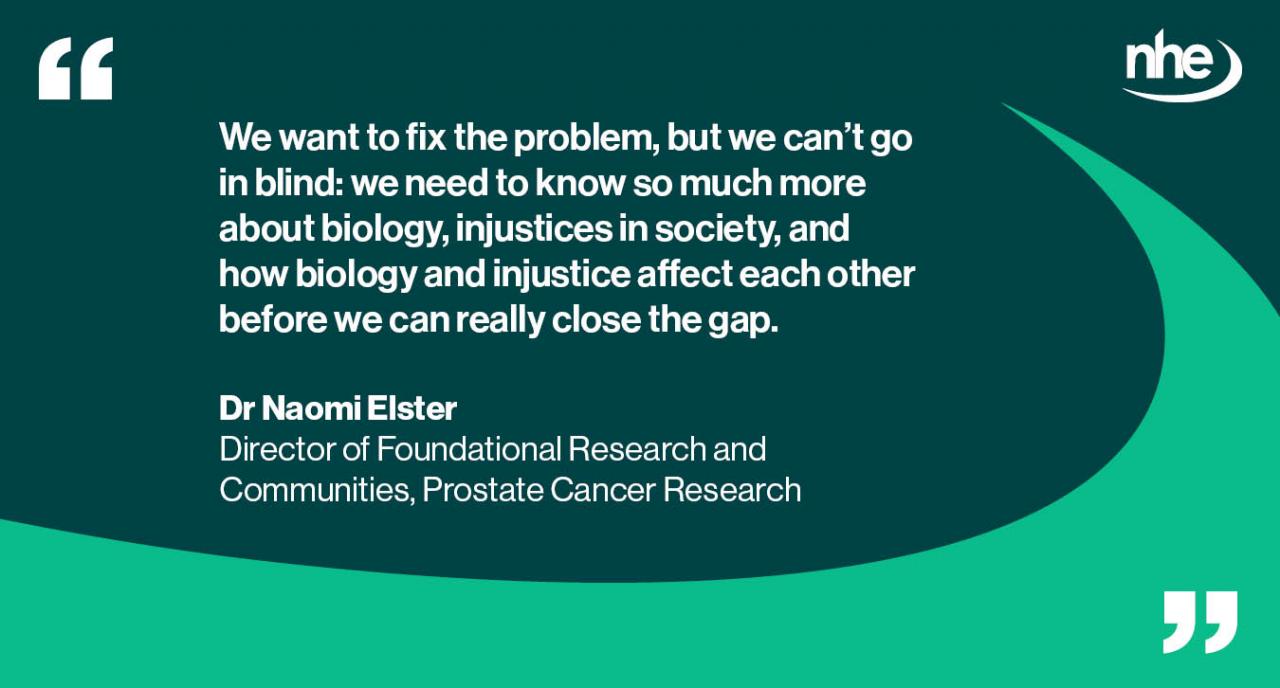
Dr Naomi Elster, Prostate Cancer Research’s Director of Foundational Research and Communities, said:
“When we first created our Racial Disparities Research Programme, far too many Black men were getting prostate cancer, and far too few pounds were being spent on doing anything about it.
We committed we would run at least three rounds of the Racial Disparities Research Programme as part of our pledge to double our funding for research, and round 2 attracted even more scientists, bringing even more ambitious ideas.
We want to fix the problem, but we can’t go in blind: we need to know so much more about biology, injustices in society, and how biology and injustice affect each other before we can really close the gap. Research is vital for us to get the answers we need.”
By combining scientific discovery, community leadership and policy advocacy, the charity said the new investment represents a vital step towards a future where no man’s chance of surviving prostate cancer is determined by his ethnicity.
Image credit: iStock