

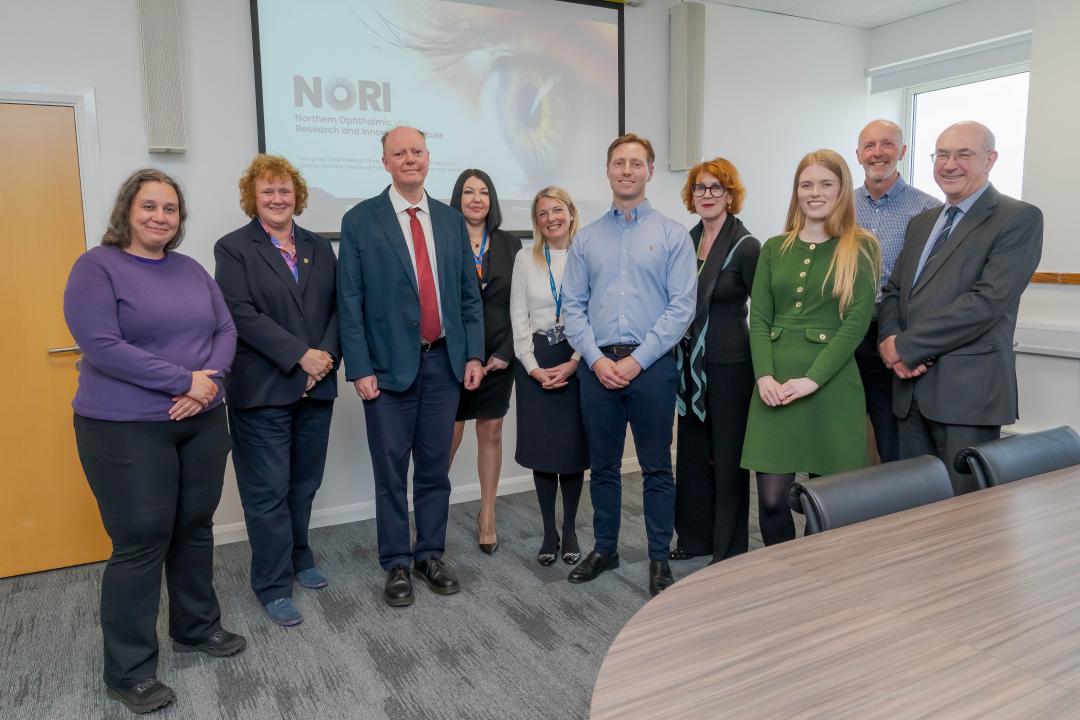
England’s Chief Medical Officer, Professor Sir Chris Whitty, has visited the University of Sunderland to explore a pioneering research programme that aims to transform how disease is detected and prevented across the UK.
The visit focused on the planned Northern Ophthalmic Research and Innovation Institute (NORI), a £4.2 million collaboration positioned to place the North East at the forefront of data-enabled healthcare. Hosted at the University’s City Campus, the initiative will integrate cutting-edge eye health technology with NHS and community health datasets to improve early diagnosis and long-term outcomes.
Located adjacent to the soon-to-open Sunderland Specialist Eye Hospital, NORI is designed to act as a hub for innovation, linking routine eye scan data with broader health records. For healthcare leaders and system planners, the move signals a shift towards more integrated, preventative care models—where early warning signs of disease can be identified more efficiently.
A New Model for Data-Driven Prevention
Currently, patient eye scans and wider health information often sit in disconnected systems. This fragmentation limits opportunities to detect conditions such as cardiovascular disease, diabetes, and neurological disorders at an early stage.
NORI seeks to address this challenge by safely bringing together these datasets into a single, secure ecosystem. By doing so, clinicians and researchers will be able to:
- Identify disease risk earlier
- Deliver more personalised interventions
- Improve population health outcomes
The institute is expected to become a global exemplar for data-enabled medicine, showcasing how regional innovation can reshape national healthcare delivery.
Strategic Importance for the North East
For NHS leaders and ICS managers, NORI represents more than a research project—it is a regional capability that aligns with national priorities on prevention, digital transformation, and health inequalities.
The North East, which faces some of the UK’s most significant health challenges, stands to benefit from earlier diagnosis pathways and more targeted care strategies. The co-location with a specialist eye hospital further strengthens the region’s clinical-research integration.
Professor Matthew Campbell, Professor of Human Metabolism and Co-Director of NORI, said:
“Professor Whitty’s visit highlights the growing national significance of the work being undertaken through NORI, and reflects a recognition of the opportunity that exists here in the North East.
“NORI was created with a bold ambition: to transform how we understand and use the eye as a gateway to earlier diagnosis, personalised intervention and healthier ageing. Working alongside our partners, we are creating a globally distinctive innovation ecosystem that has the potential to place the North East at the forefront of prevention, early detection and data-enabled healthcare.”
Implications for NHS Leaders
For professionals across the NHS and wider health sector, NORI underscores several important trends:
- Integration of datasets is becoming central to prevention strategies
- Ophthalmology is emerging as a diagnostic gateway for wider systemic disease
- Regional innovation hubs are playing a growing role in national health transformation
As pressure on services continues to rise, initiatives like NORI could be critical in shifting the system from reactive to proactive care—improving outcomes while reducing long-term demand.
Image credits: University of Sunderland