

A major new research project has found that people experiencing a first episode of psychosis achieve better long-term outcomes when Early Intervention in Psychosis (EIP) services provide the full range of support recommended in clinical guidance.
The findings, published in a new policy briefing from Centre for Mental Health and based on the EXTEND study, highlight the importance of comprehensive community-based care for people during the early stages of psychosis.
Researchers found that EIP services delivering a broad package of interventions offer a significantly better experience for service users. Key elements include dedicated case management through a care coordinator, physical health assessments, family and carer support, and access to a range of therapeutic interventions.
The study also emphasises the importance of effective transition planning when people leave EIP services. Ensuring individuals receive appropriate support as they move to community mental health teams or back to primary care can play a crucial role in sustaining recovery and long-term wellbeing.
However, the research highlights continuing inequalities in mental health care. People from racialised communities were found to experience poorer outcomes from EIP services, reflecting wider and longstanding racial disparities across both society and the NHS.
In response, the briefing calls on the Government to ensure that the forthcoming Modern Service Framework for severe mental illness sets clear national expectations for EIP provision. These should include guaranteed access to talking therapies, employment support, family interventions and carer support.
The report also urges ministers to maintain and strengthen the Patient and Carer Race Equality Framework, describing it as a vital mechanism for reducing inequalities and improving outcomes for racialised communities across mental health services.
Andy Bell, Chief Executive at Centre for Mental Health, said:
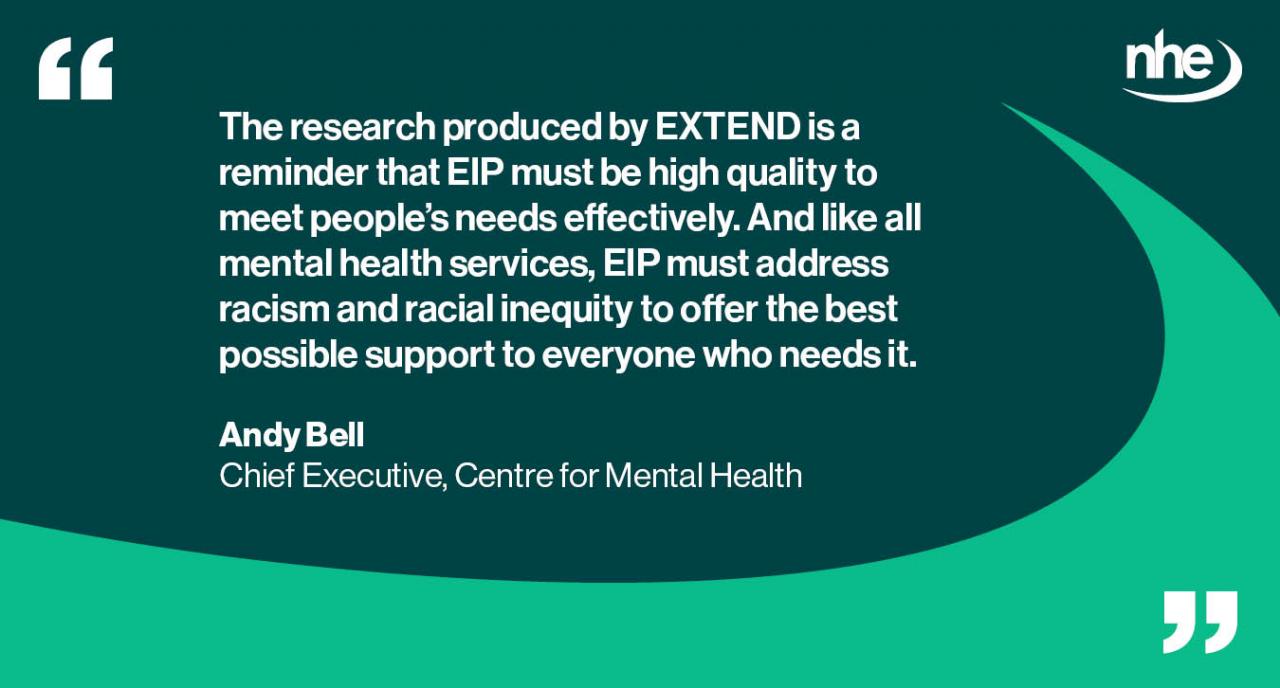
“Early Intervention in Psychosis is a vital part of the mental health system. It provides support at a crucial time in a person’s life. The research produced by EXTEND is a reminder that EIP must be high quality to meet people’s needs effectively. And like all mental health services, EIP must address racism and racial inequity to offer the best possible support to everyone who needs it.”
The findings reinforce growing evidence that investment in high-quality, comprehensive EIP services can improve recovery, enhance patient experience and reduce future demand on mental health services, while ensuring care is more equitable for all communities.
Image credit: iStock