A new study funded by the National Institute for Health and Care Research (NIHR) suggests that a simple at‑home finger‑prick blood test, combined with online brain testing, could help identify people at risk of developing dementia much earlier.
The research, published in Nature Communications and led by the University of Exeter, highlights the potential for accessible, remote testing to transform how dementia risk is detected and managed.
The study explores how people can assess their risk of dementia from home, without the need for hospital visits or specialist clinical tests.
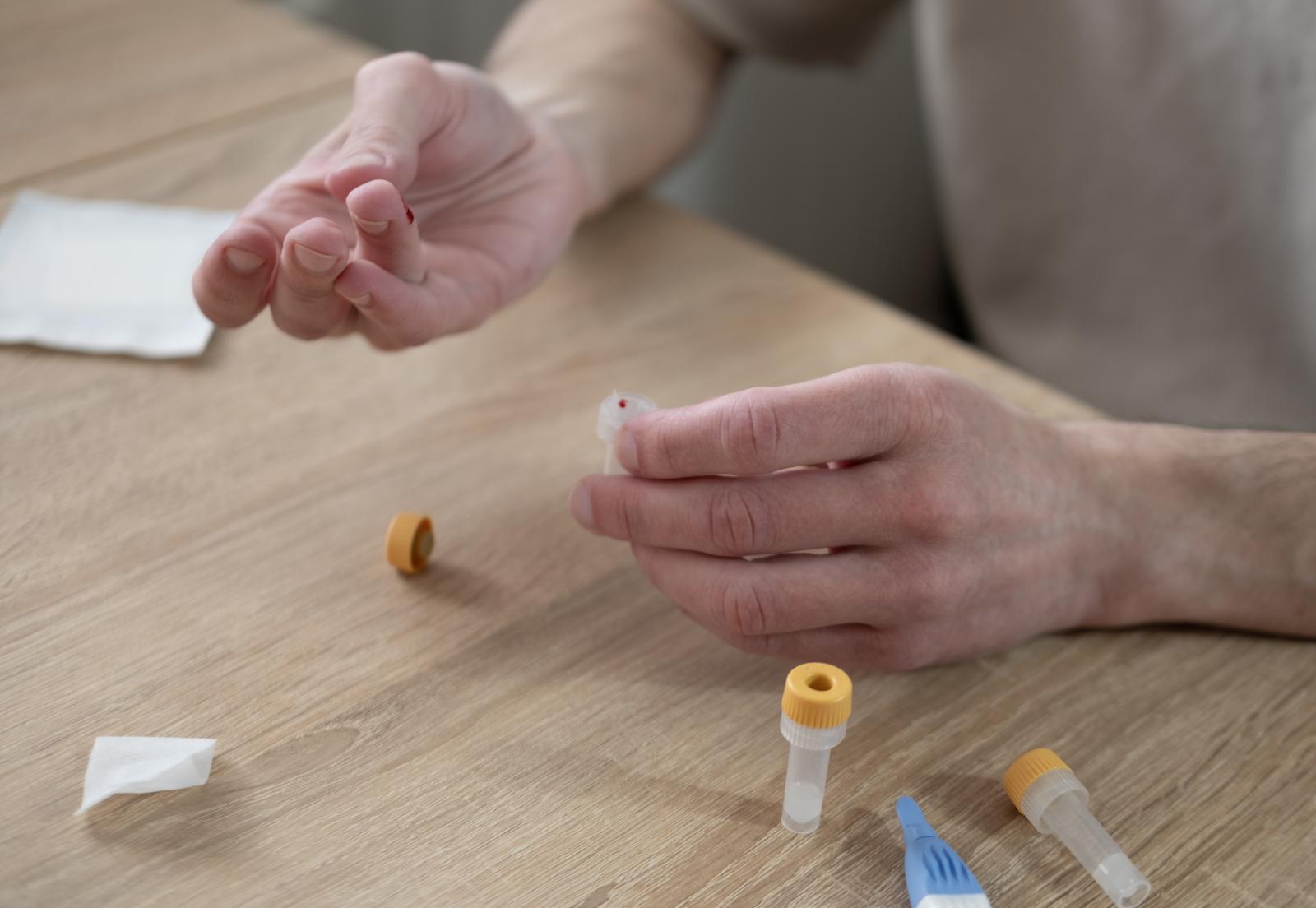
Participants completed regular online cognitive tests, assessing memory, attention and decision‑making skills, alongside a self‑administered finger‑prick blood test, which was posted back to researchers for analysis.
This combined approach could make early screening more scalable and widely accessible, particularly for people who may not yet have clear symptoms.
Researchers found a clear relationship between specific proteins in the blood and performance on cognitive tests.
Two key biomarkers were identified:
- p‑tau217, associated with Alzheimer’s disease
- Gfap, linked to broader brain health decline
Participants whose blood samples showed higher levels of these proteins were more likely to perform less well on cognitive assessments.
This allowed researchers to categorise individuals into low, medium and high risk groups, providing a clearer indication of who may benefit from further monitoring or early intervention.
The research draws on data from the PROTECT study, a large UK‑based project involving more than 30,000 participants aged over 40.
Volunteers take part in regular online testing, helping researchers better understand how cognitive function changes over time and how early signs of dementia can be detected.
As part of this new study, 174 participants were sent at‑home blood testing kits, which they administered themselves before returning samples to the research team.
Researchers say the approach could help identify dementia risk sooner, enabling earlier access to treatment, support and lifestyle interventions that may slow progression.
At the same time, it could provide reassurance for individuals who are at lower risk, helping to reduce unnecessary anxiety and avoid unnecessary clinical investigations.
By improving early identification, the method has potential to support more targeted and personalised care pathways.
Participants in the study were recruited through Join Dementia Research, a national service run by the NIHR in partnership with Alzheimer Scotland, Alzheimer’s Research UK and the Alzheimer’s Society.
The platform allows individuals to register their interest in taking part in dementia research, helping connect volunteers with studies and accelerate scientific progress.
Dementia remains one of the UK’s most significant health challenges, with early diagnosis often difficult and many people only identified once symptoms have become more advanced.
Researchers say this study demonstrates the potential for combining digital tools and simple diagnostic tests to improve early detection.
Professor Marian Knight, Scientific Director for NIHR Infrastructure, said:
"The potential of this combination of cognitive and blood tests - both of which can be done at home - is really exciting. Not only could it reduce the burden on the NHS by screening people in their own homes rather than in hospitals or clinics, but it also might mean we can identify people with dementia earlier, tailor treatments more effectively, and improve outcomes for patients. This is a fantastic example of research teams in NIHR infrastructure working together to deliver real change for the public and the NHS, in line with government priorities.”
The findings support a broader shift towards preventative and community‑based healthcare, where people can access assessments in their own homes.
If developed further, the approach could:
- Expand access to early screening
- Reduce pressure on specialist services
- Enable earlier, more effective interventions
While further research is needed to validate and scale the approach, the study provides promising evidence that combining blood‑based biomarkers with remote cognitive testing could play a role in the future of dementia care.
Image credit: iStock