

Nearly one in four people (23%) who used the NHS in the last year received an appointment notification after the appointment had already taken place, according to new analysis from The King’s Fund, Healthwatch England and National Voices.
The figure represents an increase of three percentage points on the previous year and highlights persistent administrative failings that organisations warn are damaging patient trust, delaying care and undermining staff morale.
Polling conducted by Ipsos in December 2025, repeating a survey carried out a year earlier, found that two thirds of patients and carers (66%) experienced at least one NHS administrative problem in the past 12 months.
These issues include patients not being kept informed about waiting times, having to chase test or scan results, being unclear about who to contact while waiting for care, or being given incorrect or confusing information.
Common problems reported include patients not receiving updates on how long they would wait for treatment, needing to follow up repeatedly for results, struggling to amend or cancel appointments, or receiving correspondence that was unclear or wrong. In some cases, patients said they were given the wrong appointment date or time, contributing to missed care and wasted journeys.
Perhaps most concerning, 41% of patients said these experiences made them less likely to seek NHS care in the future. The report notes that none of the headline figures showing the scale of administrative problems have improved since the same research was conducted a year earlier.
While the number of people affected has remained stubbornly high, what has changed is public awareness. NHS administrative failures are increasingly recognised as a system‑wide and persistent problem, rather than isolated incidents.
The research shows a sharp decline in public confidence in the NHS’s ability to communicate effectively. Between 2024 and 2025, the proportion of people who believed the NHS was good at communicating about appointments and test results fell from 52% to 43%. Confidence in the NHS keeping people informed about what is happening with their care dropped from 42% to 32%, while belief that patients have someone to contact about ongoing care fell from 43% to 32%.
Among those who experienced at least one administrative problem, 60% said it made them feel NHS money was being wasted, reinforcing concerns about efficiency as well as patient experience.
Stories shared with the organisations illustrate the real‑world damage caused by poor administration.
Patients described taking time off work only to discover appointments had been cancelled without notice, losing income while juggling repeatedly rescheduled consultations, and feeling unsure which messages to trust when texts, letters, phone calls and apps provided conflicting information.
Others reported receiving communications about cancer surgery before receiving biopsy results or a confirmed diagnosis, adding unnecessary anxiety. Many highlighted the stress of managing care across multiple communication channels, including phone calls, texts and more than one NHS app.
The burden of poor NHS administration is not shared equally, the report warns. People with long‑term conditions, individuals from ethnic minority backgrounds and those struggling financially are more likely to experience repeated problems. Strikingly, 81% of patients and carers who report financial struggle experienced an NHS administrative issue in the past year, compared with 63% of those who are financially comfortable.
Administrative failures are not only harmful for patients but also affect the workforce. Over half of respondents (57%) said poor administration made them believe valuable NHS staff time is being wasted.
The report concludes that ongoing issues with admin are delaying diagnosis and treatment, eroding confidence in the NHS and compounding pressures on an already stretched workforce.
Dan Wellings, Senior Fellow at the King’s Fund and co-author of the report, commented:
“These results show that for many people navigating the NHS still too often feels like being set adrift without a compass. Two thirds of patients experiencing problems with NHS administration is not a minor systems issue – it is a day‑to‑day reality for millions of people. People are left chasing basic information and struggling to manage the care they need at moments when they are already anxious about their own health or that of someone they love, and that is completely unacceptable in a 21st century health system.
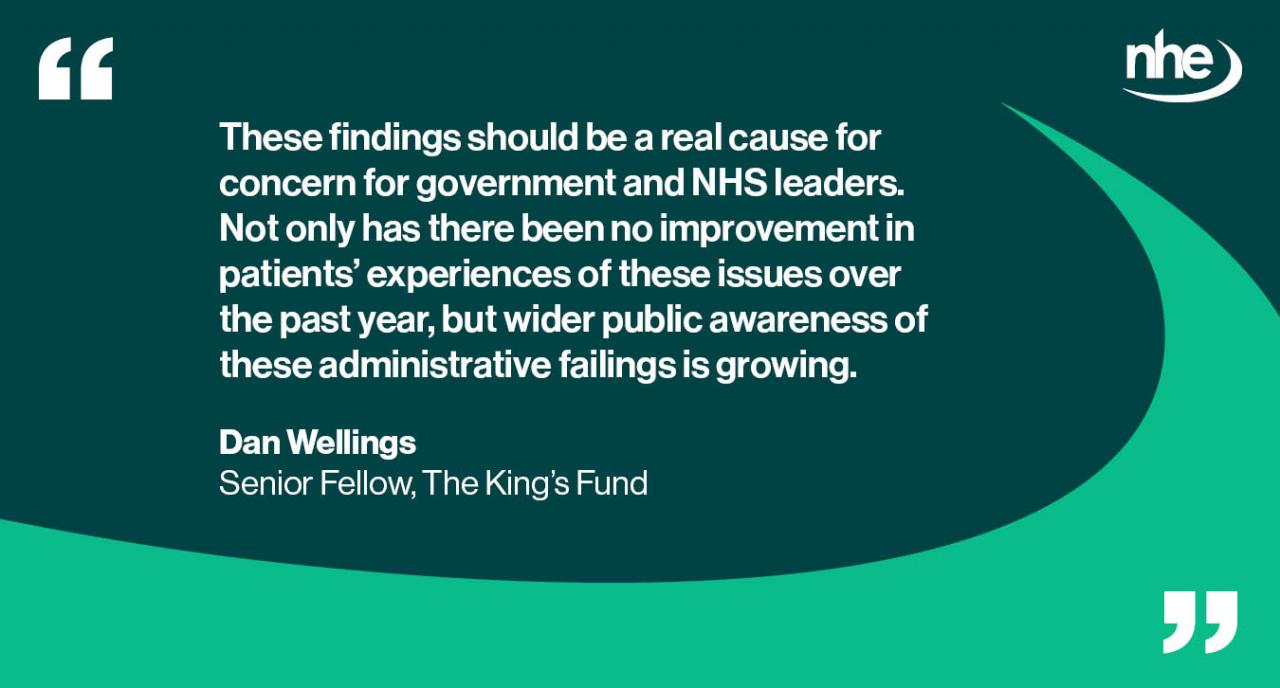
“These findings should be a real cause for concern for government and NHS leaders. Not only has there been no improvement in patients’ experiences of these issues over the past year, but wider public awareness of these administrative failings is growing. Once negative perceptions take hold, they are difficult to reverse. Recent gains in public satisfaction with the NHS may be short‑lived unless rapid action is taken to tackle this problem.
“Reducing waiting times matters. But when policy focuses too heavily on hitting numerical targets, it risks missing what patients value most while they wait: clear, timely and reliable communication.”
While the organisations acknowledge signs of a growing political focus on patient experience, including work to develop a new minimum patient experience standard for people on elective waiting lists, they argue that no material progress has been made since last year.
The King’s Fund, Healthwatch England and National Voices are calling for NHS administration to be treated as a national priority, supported by clear standards and accountability.
They urge digital tools such as the NHS App to be intuitive, accessible and better integrated, so patients are not left navigating multiple platforms. They also call for routine collection and use of patient feedback on administrative processes, with improvements co‑produced alongside patients and service users.
Crucially, the organisations stress the need to value and support the NHS administrative workforce, with proper planning, training and development to ensure systems work effectively for both patients and staff.
Image credit: iStock