
Senior NHS leaders and urgent care managers are being urged to reinforce public health messaging as new analysis highlights a clear pattern: A&E attendances fall sharply when England are playing – only to rebound significantly after the final whistle.
The findings, based on attendance data from Euro 2024, underscore a growing behavioural trend among football fans that could have important implications for service planning during major tournaments, including England’s current World Cup campaign.
Analysis shows that during England fixtures, A&E departments saw just under 17,000 fewer attendances than expected across the tournament—a striking reduction equivalent to roughly a quarter of the capacity of the AT&T Stadium in Dallas, where England kick off their World Cup campaign tonight.
The steepest decline came during England’s opening group-stage match:
- Serbia (Group Stage): 8.8% reduction in attendances versus the six-week average
- Switzerland (Quarter-final): 5.9% reduction
- Spain (Final): 5.7% reduction
The data also suggests a clear behavioural pattern, with the drop in attendances more pronounced during weekend matches compared with midweek fixtures.
Notably, emergency departments experienced their sharpest decrease in the hour before kick-off, with attendances falling by around 11%, indicating that patients may be delaying care to watch the game.
While the in-game lull may provide a temporary reprieve for pressured departments, the data reveals a more concerning trend in the hours that follow.
After matches conclude, A&E departments see a surge in demand with hundreds more patients attend A&E in the eight hours post-game, and around a 10% increase in trauma and musculoskeletal cases, including injuries linked to falls and assaults.
The most significant rise occurs overnight. The analysis highlights that the biggest increase in admissions at the last Euros was between 1am and 2am, when services experienced a 6.3% rise in admissions compared to the average for that time of day
This surge is likely driven by fans leaving pubs, fan zones and private gatherings, often combined with increased alcohol consumption and related incidents.
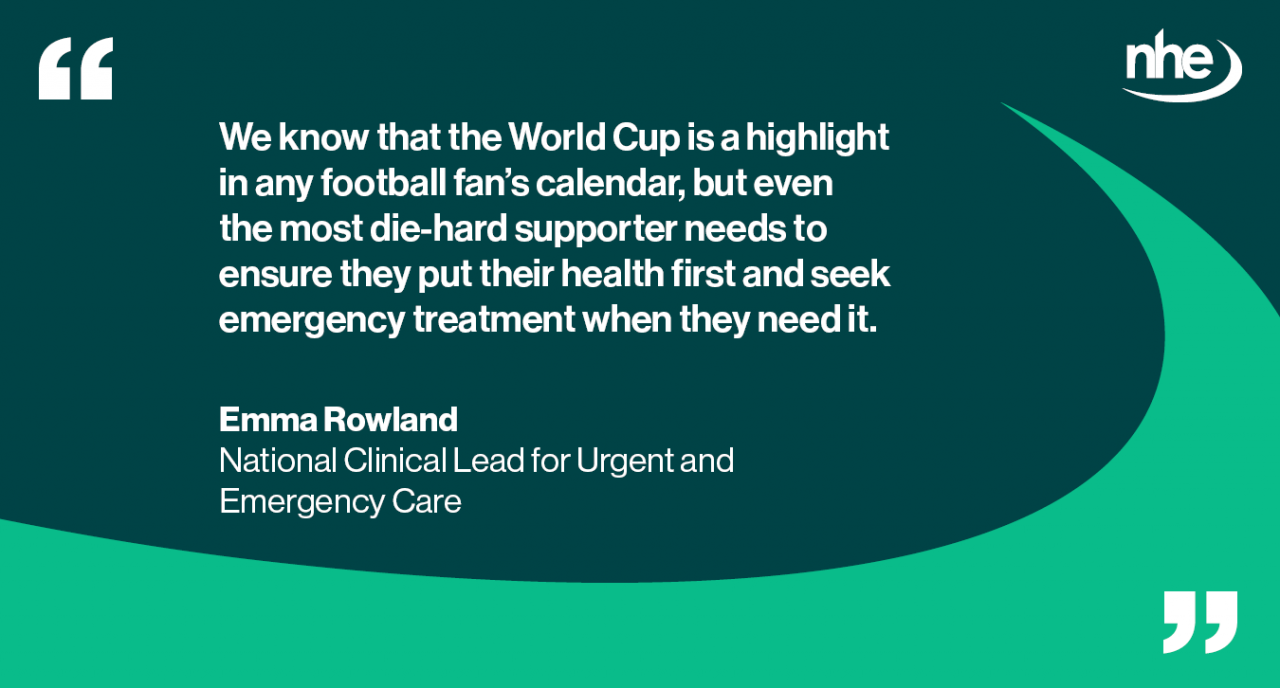
Emma Rowland, NHS England’s National Clinical Lead for Urgent and Emergency Care, said:
“We know that the World Cup is a highlight in any football fan’s calendar, but even the most die-hard supporter needs to ensure they put their health first and seek emergency treatment when they need it.
“The NHS will be available as it always is throughout the next 32 days of football action – including through extra time, penalties and beyond – so if you need care, please don’t hold off coming forward.”
For NHS operational teams, these findings underline the need for dynamic resource planning during major sporting events. While reduced attendances during matches may appear beneficial, the delayed demand creates pressure at already challenging overnight periods.
Key considerations for healthcare leaders include:
- Aligning staffing models to anticipate late-night surges
- Strengthening public messaging around seeking timely medical care
- Collaborating with local authorities and event organisers to mitigate injury risks
There is also a wider public health concern: delayed attendance could lead to worsening outcomes for patients who choose to postpone urgent care.
The pattern is consistent with previous tournaments and reflects a broader behavioural shift where major national events influence healthcare usage.
For NHS leaders, the message is clear: football may bring the nation together, but it also subtly reshapes demand on frontline services – requiring proactive planning, clear communication, and targeted interventions to keep patients safe.
Image credit: iStock